
Key Products
Glycyrrhizin & Licorice Extract from Iran: Blocks, Powder and Glycyrrhizinate Salts
Why Source Glycyrrhizin from Iran?
This is one of the few categories where Iran is not merely competitive but structurally central to world supply.
Large-scale industrial extraction of licorice happens in essentially two countries: Iran and China. Glycyrrhiza glabra grows abundantly across Iranian steppe and river-valley land, the extraction industry around it has been running for generations, and roughly 95% of Iranian licorice production is exported. Iran has at times been the largest supplier of licorice extract to Europe by volume, and European buyers have long-standing commercial relationships with Iranian extractors.
So unlike most origins we write about, the question here is not whether Iran can supply. It is which of several quite different products you are actually buying, and how the number on the certificate was generated.
That is where buyers lose money in this category, and it is what this page is about. “Glycyrrhizin 98%” is not a specification. It could be the free acid or any of three salts, assayed by a method that overstates it, on a basis nobody defined.
If you source other Iranian botanical extracts, see our guide to rose water and herbal extracts.
What You Are Actually Buying – the Product Ladder
These are different products at different prices, and the names are used loosely in trade. Decide where on this ladder you sit before requesting a quote.
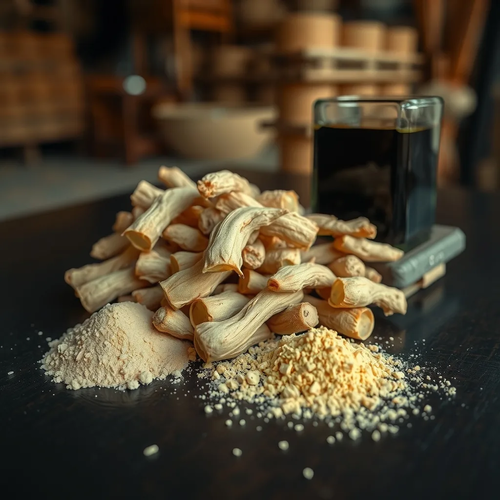
1. Licorice root – dried, cut or powdered Glycyrrhiza glabra root. The raw material. Sold by glycyrrhizin content, which varies widely with provenance, age and plant part.
2. Crude licorice extract – “block” or paste. The traditional product: aqueous extraction, concentrated into solid blocks. Glycyrrhizin typically in the low tens of percent. The workhorse of the tobacco and confectionery trades.
3. Spray-dried licorice powder. The same extract dried to a free-flowing powder, easier to handle and dose. Specify glycyrrhizin content and carrier, if any.
4. Purified glycyrrhizin / glycyrrhizic acid. The isolated triterpenoid saponin, roughly fifty times sweeter than sucrose. CAS 1405-86-3 for the free acid.
5. Glycyrrhizinate salts – the forms most commonly traded:
- Monoammonium glycyrrhizinate (MAG), CAS 53956-04-0 – the common commercial and pharmaceutical form; white to yellowish powder, intensely sweet.
- Dipotassium glycyrrhizinate (DPG) – the cosmetic industry standard, valued for water solubility and anti-irritant action.
- Trisodium and triammonium glycyrrhizinate – used in food and beverage applications.
6. Deglycyrrhizinated licorice (DGL) – the inverse product, with glycyrrhizin removed, used in supplements precisely to avoid the blood-pressure effect described below.
7. Licorice flavonoids – a separate and higher-value stream: glabridin, liquiritin, licochalcone. Glabridin in particular commands a substantial premium in cosmetics for skin-brightening. If your interest is cosmetic actives rather than sweetness or anti-inflammatory function, this is probably the product you want, and it is a different purchase entirely.
The Assay Problem – Read This Before Comparing Quotes
Two traps, and they compound.
Trap one: which molecule, and on what basis?
A “98%” figure can be assayed as glycyrrhizic acid, or as the ammonium salt, or as the potassium salt – and the molecular weights differ, so the same material yields different numbers. It can be reported as-is or on a dried/anhydrous basis, and these materials carry meaningful moisture.
Specify: the exact substance, its CAS number, the salt form, the assay basis (anhydrous or as-is), and the acceptance range. A pharmacopoeial specification will read something like “98.0-102.0% on the anhydrous basis” – that is what a real specification looks like.
Trap two: the analytical method.
Older UV / spectrophotometric methods for glycyrrhizin read high, because other components in a licorice matrix absorb in the same region. HPLC against a certified reference standard gives the true figure. The gap between the two methods is not small, and it is the single commonest reason two honest suppliers quote very different numbers for similar material.
Require HPLC, name it in the specification, and have all candidate suppliers tested by the same method at the same independent laboratory. Until you have done that, you are not comparing prices – you are comparing methods.
One further technical point worth specifying: 18β-glycyrrhizin is the natural isomer; 18α forms exist and are used in specific pharmaceutical contexts. If the isomer matters to your application, say so, because it will not be volunteered.
Safety and EU Labelling – the Compliance Core
Glycyrrhizin is not a neutral sweetener and you must not sell it as one. At sustained intake it causes pseudohyperaldosteronism: sodium and water retention, potassium loss, and raised blood pressure. European scientific advice has long centred on the view that habitual intake above roughly 100 mg per day of glycyrrhizinic acid may cause adverse effects in some people, with susceptible groups – those with hypertension, cardiovascular or kidney conditions, and pregnant women – affected at lower levels.
This translates into hard labelling obligations in the EU, and they are the thing first-time importers miss:
- Confectionery and beverages containing glycyrrhizinic acid at or above defined thresholds must carry the statement “contains liquorice”, with an additional warning at higher levels advising that people with hypertension should avoid excessive consumption. The thresholds differ for solid confectionery and for beverages. Confirm the current figures and exact wording for your destination before your labels are printed – this is a labelling cost, and a label reprint after production is pure loss.
- In the US, licorice and licorice derivatives are affirmed GRAS under 21 CFR 184.1408, with maximum use levels specified by food category. Check your category’s limit.
- Pharmaceutical and cosmetic use have their own frameworks – pharmacopoeial monographs, and for cosmetics the applicable cosmetic regulation and safety assessment.
Practical consequence for a trader: your customer’s formulation, not your powder, determines whether a warning is triggered. You add real value by telling them the glycyrrhizin content precisely and early – which is another reason the assay method matters.
Quality & Testing
Specify against the grade you actually need; food, pharmaceutical, cosmetic and tobacco grades are genuinely different specifications at genuinely different prices.
- Assay – substance, salt form, CAS, basis, range, by HPLC against a certified reference standard.
- Identity – IR or HPLC retention against reference; confirm species as Glycyrrhiza glabra if that matters to your claim, since G. uralensis and G. inflata are distinct species with different flavonoid profiles.
- Loss on drying / water content.
- Residue on ignition / sulphated ash.
- Heavy metals – lead, arsenic, cadmium, mercury, with limits for your destination and grade.
- Pesticide residues. Relevant even for wild-harvested root, because collection areas can sit near treated farmland. Require a multi-residue screen for food, pharma and cosmetic grades.
- Residual solvents to ICH Q3C classes where any organic solvent is used in extraction or purification. Ask what the process actually uses – aqueous and ammoniacal extraction is common, but purification steps may introduce alcohols.
- Microbiology – total aerobic count, yeasts and moulds, E. coli, Salmonella, absence criteria per grade.
- Aflatoxins and ochratoxin A – root is a soil-grown, field-dried material; mycotoxin testing is appropriate and some destinations expect it.
- Appearance, colour and solubility – colour in particular matters for cosmetic and clear-beverage applications and is a common source of dispute. Specify it, and approve a physical standard.
- Pharmacopoeial compliance – state whether you require USP, EP or another monograph, for the root, the extract or the salt. “Pharma grade” with no monograph named is not a specification.
- Documentation – full CoA with methods stated, MSDS, specification sheet, flow chart of the manufacturing process, allergen and GMO statements, and for food use a TSE/BSE statement where requested.
- Facility standards – ISO 22000 / HACCP, GMP for pharmaceutical grade, Halal and Kosher where your channel needs them.
Wild Harvest and Sustainability – an Honest Section
Most licorice is wild-collected, not cultivated, and harvesting means digging up the root system. Done carelessly, at the scale this industry operates, that damages the stand and the soil it holds. This is a genuine environmental issue in the licorice trade, and European buyers increasingly ask about it.
Being straight about it is also commercially useful:
- Ask whether the root is wild-collected or cultivated, and where.
- Ask what replanting or rotational harvesting practice the collector follows, if any.
- For buyers who need it, FairWild and comparable wild-collection standards exist and certified material can be sourced, at a premium and with lead time.
- Expect to pay more for a verifiable chain. A supplier who has never been asked the question will not have an answer ready, which is itself informative.
If your customer base is European natural-products retail, this is not an optional nicety. Get ahead of it.
Applications and Who Buys It
- Tobacco – licorice extract is a long-established casing ingredient, and historically one of the largest single outlets for Iranian block extract by volume.
- Confectionery – licorice candy, strongest in the Netherlands and the Nordics, plus a wide range of sweets and pastilles.
- Beverages – soft drinks, herbal and functional drinks, and brewing.
- Pharmaceutical – anti-inflammatory and hepatoprotective preparations; monoammonium glycyrrhizinate has established clinical use in several Asian markets.
- Cosmetics and personal care – dipotassium glycyrrhizinate as a standard anti-irritant and soothing active; glabridin for brightening.
- Food flavour and sweetness – as a sweetness modifier and flavour enhancer, bearing in mind the labelling thresholds above.
- Animal feed and supplements.
Packaging & Marking
- Powders: 20-25 kg fibre drums or cartons with double food-grade PE liner, heat-sealed. Pharmaceutical grade in validated packaging with tamper evidence.
- Block extract: wrapped blocks in cartons or crates; specify block weight and wrapping, and note that block extract softens and can deform in heat – agree stowage accordingly.
- Moisture barrier throughout. These materials are hygroscopic; moisture ingress causes caking in powders and surface changes in blocks.
- Protect from light and heat; avoid co-loading with strongly aromatic cargo.
- Mark with product name, CAS number, grade, assay and method, batch number, manufacturing and retest or expiry date, net weight, origin, manufacturer code, and the destination’s required regulatory information.
- Retained samples from every batch, held by both sides. In a specification-driven product this is the only way a later dispute can be resolved factually.
MOQ, Lead Time & Incoterms
MOQ scales with purity. Crude block extract and spray-dried powder are quoted in tonnes and by container. Purified glycyrrhizin and the salts are quoted in hundreds of kilograms or less, and high-purity material and flavonoid isolates such as glabridin trade in far smaller quantities at far higher prices.
Lead time typically runs 3-8 weeks depending on grade, with purified salts, pharmacopoeial grades and any custom specification at the longer end. Root availability is seasonal in collection but extractors hold stock, so the binding constraint is usually the purification run, not the harvest.
Incoterms: FOB Bandar Abbas for sea freight; EXW for overland movement to Turkey and the Caucasus. CFR/CIF available. Air freight is realistic for the high-purity, low-volume grades and is often the right choice for a first pharmaceutical or cosmetic lot. Fix in the contract who commissions and pays for the independent HPLC verification and where risk transfers.
Price & Total Cost of Ownership
- Compare on cost per kilogram of actual glycyrrhizin, by HPLC, on a stated basis. Nothing else is a comparison.
- Grade is the dominant driver: crude block, food, cosmetic, pharmacopoeial and isolated flavonoid span orders of magnitude.
- Root price and availability move the base, and a poor collection season is felt.
- Purification depth – each step from crude to 98%+ adds cost and yield loss.
- Certification – GMP, pharmacopoeial, FairWild, organic, Halal and Kosher each add real cost.
- Testing and verification are proportionally significant on small high-value lots; budget them as product cost.
The expensive failures here are paying a 98% price for a UV-assayed 80% material, a labelling obligation discovered after the customer’s packaging was printed, and a cosmetic lot rejected on colour that nobody agreed in writing. All three are prevented before the order.
How IranLocalize Reduces Your Risk
- Producer verification – we visit, confirm the plant extracts and purifies rather than re-packing, and establish which steps are done in house.
- Specification drafting – substance, CAS, salt form, assay basis and range, method named as HPLC, plus moisture, ash, heavy metals, residual solvents, microbiology, mycotoxins, colour and solubility.
- Independent verification – HPLC assay at a laboratory we instruct, with all candidates tested identically so the comparison is real.
- Process transparency – we obtain the manufacturing flow chart and the solvents actually used, which is what determines your residual-solvent risk.
- Regulatory support – we flag the labelling thresholds applicable to your destination and product category early, while the formulation can still be adjusted.
- Sustainability chain – we ask the wild-harvest questions and tell you plainly what the answers are, including when there is no documented practice.
- Contracting with hard specs, retained samples, inspection rights and rejection rights.
- Pre-shipment inspection – packaging integrity and seals, labelling and CAS accuracy, moisture, sampling for retained analysis, loading supervision.
RFQ Checklist – Send This to Get a Precise Quote
- Exact substance and CAS – glycyrrhizic acid, monoammonium, dipotassium, trisodium, crude extract, DGL, or a flavonoid isolate.
- Assay required, the basis (anhydrous or as-is) and the acceptance range.
- Method – state HPLC, and that you will verify independently.
- Grade – food, pharmaceutical, cosmetic, or tobacco – and the pharmacopoeia if applicable.
- Application and inclusion rate, so the labelling thresholds can be assessed.
- Destination country – determines labelling, limits and documentation.
- Species – G. glabra specifically, or any Glycyrrhiza.
- Isomer requirement if relevant.
- Colour and solubility requirements, with a physical standard if you have one.
- Heavy metal, pesticide, residual solvent and microbiology limits.
- Certification – GMP, ISO 22000, Halal, Kosher, organic, FairWild.
- Wild-collected or cultivated, and whether you need documented harvesting practice.
- Quantity, packaging and whether this is a trial or a repeating programme.
- Incoterm, destination, and target shipment window.
Buyer Mistakes and How to Avoid Them
- Writing “glycyrrhizin 98%” and nothing else. Fix: substance, CAS, salt form, basis, range and method.
- Comparing a UV number with an HPLC number. Fix: require HPLC and test all candidates identically at one laboratory.
- Ignoring the assay basis. Anhydrous versus as-is is a real difference on a hygroscopic material. Fix: state it.
- Treating it as a straightforward sweetener. Fix: understand the blood-pressure effect and the labelling thresholds, and tell your customer the exact content early.
- Discovering the “contains liquorice” obligation after labels are printed. Fix: assess thresholds at formulation stage.
- Not asking which species. G. glabra, G. uralensis and G. inflata differ in flavonoid profile. Fix: specify.
- Not asking about residual solvents. Fix: get the process flow chart and test to ICH Q3C.
- Ignoring wild-harvest provenance. Fix: ask now, before a European customer asks you.
- No retained samples. Fix: retain from every batch on both sides.
FAQs
What is the difference between glycyrrhizin, glycyrrhizic acid and monoammonium glycyrrhizinate? Glycyrrhizin and glycyrrhizic (or glycyrrhizinic) acid refer to the same triterpenoid saponin, CAS 1405-86-3. Monoammonium glycyrrhizinate, CAS 53956-04-0, is its ammonium salt and the most commonly traded commercial form. They are not interchangeable on a weight basis, so specify which one.
Why do suppliers quote such different purities for similar material? Usually the analytical method. UV and spectrophotometric methods read high on a licorice matrix; HPLC against a certified standard gives the true figure. Specify HPLC and verify independently.
How sweet is it? Roughly fifty times sucrose, with a characteristic lingering licorice note rather than a clean sugar sweetness – which is why it is used as a sweetness modifier and flavour enhancer rather than a bulk sweetener, quite apart from the intake limits.
Does it really affect blood pressure? Yes. Sustained intake causes sodium retention, potassium loss and raised blood pressure, which is the basis of the EU labelling requirements and the reason deglycyrrhizinated licorice exists as a separate product.
Can I get pharmaceutical grade from Iran? Pharmaceutical-grade material is produced, but “pharma grade” means nothing without a named monograph and a verified facility standard. Specify the pharmacopoeia, require the full documentation package, and expect the facility audit to be part of the purchase.
Is Iranian licorice wild or cultivated? Predominantly wild-collected. Ask your specific supplier, and ask what harvesting practice is followed – it is increasingly a question your own European customers will put to you.
What is a realistic first order? For crude extract or powder, one container with independent HPLC verification. For purified salts, a smaller lot by air with full analysis and a facility documentation package, before committing to a programme.
How are payments handled given banking restrictions? This depends on your jurisdiction and bank and must be settled before the contract. We will tell you plainly what routes are and are not workable rather than promise a channel that does not exist.
Collaboration Workflow with IranLocalize
- Send your RFQ using the checklist above, naming substance, CAS, grade and destination.
- We shortlist verified producers and state clearly which extract and purify in house and which re-pack.
- Sample supply from current production, with retained samples on both sides.
- Independent HPLC verification plus the full contaminant panel, all candidates by the same method at the same laboratory.
- Process and documentation review – flow chart, solvents, facility standards, pharmacopoeial compliance.
- Regulatory assessment – labelling thresholds for your destination and inclusion rate, flagged while the formulation can still change.
- Contract with hard specs including the method, retained-sample rights, inspection rights and penalties.
- Production and pre-shipment inspection – packaging, labelling and CAS accuracy, moisture, sampling, loading supervision.
- Post-delivery review – your incoming QC feeds back into the next lot’s specification.
Executive Summary
- Why Iran: one of only two countries extracting licorice at industrial scale, with abundant Glycyrrhiza glabra, a generations-old extraction industry, around 95% of production exported, and long-standing European trade relationships.
- What actually matters: which substance and salt, the assay basis and the HPLC method, the grade and its monograph – not a bare percentage.
- Where buyers lose money: paying a high-purity price for a UV-assayed number, and meeting the EU “contains liquorice” labelling obligation after the customer’s packaging is printed.
- Worth getting ahead of: wild-harvest provenance, which European natural-products buyers increasingly ask about.
- Why IranLocalize: we verify the producer and what it actually does in house, specify beyond the percentage, run identical independent HPLC on every candidate, obtain the process flow chart, and flag the labelling thresholds while they can still be designed around.
Ready to evaluate licorice extract producers in Iran? Send us the substance and CAS, your grade and assay requirement, your application and inclusion rate, and your destination. We will come back with verified producers, independently assayed samples, and a clear read on your labelling position.