

Key Products
Iranian Spunbond Shoe Covers (Disposable Overshoes) — Direct Sourcing, OEM & Export
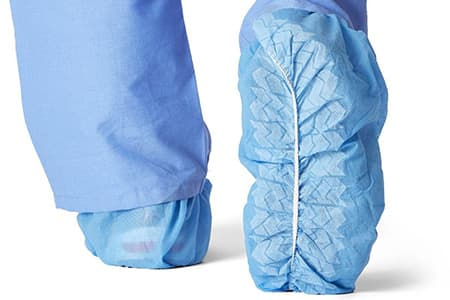
Why Source Shoe Covers from Iran? Disposable nonwoven products have seen steady, demand-driven growth across healthcare, food processing, cleanrooms, and facility services. Within this category, PP spunbond shoe covers stand out for their blend of breathability, durability, and cost efficiency. Iran has emerged as a credible hub for spunbond nonwovens thanks to access to PP feedstock, experienced operators, SS/SSS/SMS production lines, and advantageous regional logistics to MENA and Europe. For B2B buyers, that combination translates to competitive pricing, reliable quality, shorter lead times, and flexible OEM options.
If you are optimizing purely for the lowest unit price, you risk inconsistent GSM, weak seams, and a high complaint rate. If you care about total cost of ownership (TCO)—returns, rework, downtime, brand reputation—the right Iranian producer, verified and contract-managed, is a smarter choice. IranLocalize exists to bridge exactly that gap: verified suppliers, clear specs, enforceable contracts, and shipment-level QC.
Product Overview & Use Cases
Disposable Shoe Covers / Overshoes (PP Spunbond) are single-use covers worn over shoes to prevent tracking contaminants into controlled areas.
Core applications
- Hospitals, clinics, labs, pharma
- Food and beverage processing
- Cleanrooms, electronics, optics
- Residential/real-estate visits, facility maintenance
- Show floors, exhibitions, production line tours
Typical construction
- Base layer: Polypropylene spunbond (commonly 20–40 GSM for general use; 35–45 GSM where tear resistance matters)
- Water-repellent option: Light PE lamination or SMS for droplet resistance
- Seams: Ultrasonic welding preferred for strength and neat appearance; elasticized opening for secure fit
- Sizing: Standard and oversize (for safety boots)
Non-negotiable truth (buyer’s perspective): Pushing GSM below ~25 to shave cents looks good on paper, but usually fails on the floor—heel/ toe tearing, seam burst, and slippage complaints. For moderate foot traffic, 30–35 GSM is the practical floor.
What Iranian Manufacturers Do Well
- Consistent GSM & web uniformity: SS/SSS control improves air permeability and tear balance.
- Ultrasonic seam capability: Cleaner edges, faster throughput, less scrap.
- OEM flexibility: Private label, 1–2 color print, carton marking, barcode/QR, and custom packaging.
- Regional advantage: Shorter transit to GCC/Levant/North Africa and Mediterranean ports; better responsiveness during demand surges.
- Material options: From pure PP spunbond to laminated PE or SMS for wetter environments.
Product Variants & Recommended Specs
1) General-Purpose Spunbond
- GSM: 30–35 (25–30 for light, short visits; 35 for improved durability)
- Seam: Ultrasonic or elastic sew; elastic opening
- Color: Blue/green/white standard; others on request
- Packs: 50–100 pairs per polybag; carton per CBM constraints
2) Water-Repellent / Laminated
- Structure: Spunbond + light PE lamination or SMS
- Use case: Splashes/ droplets; food plants; wet floors
- GSM (overall feel): 35–45 equivalent
- Seam: Ultrasonic recommended
3) Oversize / Anti-Skid Industrial
- Fit: Over safety boots and largers soles
- Anti-slip: Printed/pasted anti-skid pattern on sole
- Use case: Site tours, industrial cleaning, carwash, facilities
Execution tip: If daily traffic is medium-to-high, avoid sub-30 GSM and lock anti-skid for smooth surfaces.
Quality, Compliance & Testing
- Sizing & elastic recovery: Check elastic force uniformity; length/width tolerances; no frayed edges
- Tear/abrasion: Reinforce heel/toe; simulate typical route cycles
- Repellency (laminated/SMS): Droplet penetration checks; delamination checks
- Hygiene controls: Clean packing area; batch traceability on bags/cartons
- System standards: ISO 9001 for QMS, ISO 14001 for EMS at plant level
- Sampling (AQL): Recommend AQL 2.5 (or better) for major defects. IranLocalize defines and enforces the sampling plan with every shipment.
Packaging & Marking
- Retail/industrial packs: 50 or 100 pairs per pack as standard
- OEM/Private label: Custom artwork, brand colors, barcode/QR, language panels
- Carton marks: Item code, color, size, GSM, pairs/carton, NW/GW, dimensions, batch/lot, Made in Iran
MOQ, Lead Time & Incoterms
- MOQ: Typically 20,000–50,000 pairs (lower MOQs accepted with price uplift)
- Lead time: 7–14 business days for standard items; 15–25 days for full OEM
- Incoterms: EXW/FOB Bandar Abbas/SAHEL ports; CPT/CIF to GCC, Med, and EU ports
- Payments: Wire transfer; L/C options case-by-case
Coaching, not comfort: If a seller promises unrealistic lead times or sub-MOQ pricing, expect either line capacity issues or quality trade-offs. We verify real capacity and lock timelines with contractual penalties.
Price & TCO vs. Global Alternatives
- Seam strength & tearing: With 30–40 GSM and ultrasonic, Iranian products are competitive with mainstream imports.
- Real cost: Regional freight + consistent QC often yields lower TCO than distant alternatives with higher defect rates.
- OEM agility: Faster artwork, plates, and packaging changeovers are typical in Iran at practical MOQs.
- Supply risk: Verified sellers + shipment-level QC reduce the “unknowns” that erode margin.
How IranLocalize Reduces Your Risk
IranLocalize operates as your sourcing, verification, and QC arm on the ground:
- Supplier screening: Capacity, line configuration (S/SS/SSS/SMS), historical customers, compliance.
- Pre-order sampling: Current-line samples, not lab one-offs. AQL plan documented.
- Negotiation & contracting: Hard specs (GSM, seam, color), packaging, marking, Incoterms, penalties, milestones.
- In-process & PSI: Production monitoring; pre-shipment inspection—count, weight, random carton opens, artwork/mark check.
- Logistics & docs: Export docs, labeling per destination, delivery per Incoterms.
- Clear comms: A single project manager (WhatsApp/email) for updates and approvals.
Our rule: claims must be backed by data and enforceable terms. If it’s not in the spec or contract, it’s a risk. We remove that ambiguity.
RFQ Checklist (Send This to Get a Precise Quote)
Include these items so quotes are comparable and binding:
- Type: Spunbond / PE-Laminated / SMS
- GSM target: 25 / 30 / 35 / 40 (state tolerance)
- Size & fit: Standard / Oversize; Anti-Skid (Y/N)
- Color: Blue/green/white or custom
- Seam: Ultrasonic (preferred) / sewn elastic
- Packaging: 50 or 100 pairs per pack; OEM printing (Y/N); carton marks
- Quantity: Total pairs + replenishment cadence (one-off / monthly / quarterly)
- Destination + Incoterms: FOB/CIF/CPT with city/port for freight calc
- Target lead time: Project date or seasonal window
- Regulatory notes: Any medical/food contact requirements in destination country
Buyer Mistakes (and How to Avoid Them)
- “Cut GSM to cut price.”
Result: burst seams, heel tears, returns.
Fix: use 30–35 GSM minimum for regular traffic, 35–40 GSM for industrial routes. - “Specs left vague.”
Result: inconsistent fabric/lamination, poor repellency.
Fix: written Spec Sheet with seam type, GSM, lamination, anti-skid, color, AQL. - “No real samples or PSI.”
Result: color mismatch, weak elastic, odd sizing.
Fix: approve current production samples; pre-shipment inspection with carton-level checks. - “Timeline optimism.”
Result: missed windows and stockouts.
Fix: milestone calendar (samples → production → PSI → ship) + liquidated damages for delays.
FAQs
Spunbond vs. plastic (CPE/PE) shoe covers—what’s the difference?
Spunbond is more breathable and comfortable for longer wear; plastic is cheaper and more water-tight but sweat-prone and more slippery. For wet zones, use spunbond + PE lamination or SMS to balance comfort and repellency.
Can we add anti-skid?
Yes—sole patterns improve grip on smooth floors; recommended for site tours and facility maintenance.
Available colors?
Blue/green/white are standard. Custom colors are possible with adjusted MOQs/lead times.
Best GSM for clinics and general visits?
30–35 GSM with ultrasonic seams is the sweet spot for durability without over-engineering.
OEM impact on lead time?
Artwork/plates and packaging typically add 5–10 business days, depending on season and queue.
Rolling orders?
Yes. We set reorder cadence + safety stock to stabilize your service level and unit economics.
Collaboration Workflow with IranLocalize
- Send RFQ using the checklist above.
- Supplier shortlist (2–3 verified options) + tech/commercial proposals.
- Sample approval (current production) + documented AQL.
- Contract with hard specs, Incoterms, penalties, and milestones.
- Production & PSI with photo/video evidence and signed checklists.
- Shipping & documents aligned to destination regulations.
- After-sales: performance review; optimize GSM/packaging for sustained TCO wins.
Executive Summary
- Why Iran: mature spunbond capability, competitive PP access, skilled operators, quick OEM, regional freight advantage.
- What matters: spec accuracy, enforceable contracts, and shipment-level QC—not just unit price promises.
- Why IranLocalize: unbiased supplier verification, precise specs, negotiator on your side, and rigorous PSI.
Ready to evaluate suppliers in Iran? Share your RFQ. We’ll deliver verified options, current-line samples, and firm timelines.