Key Products
Lamb Tail Fat from Iran
Why Source Lamb Tail Fat from Iran?
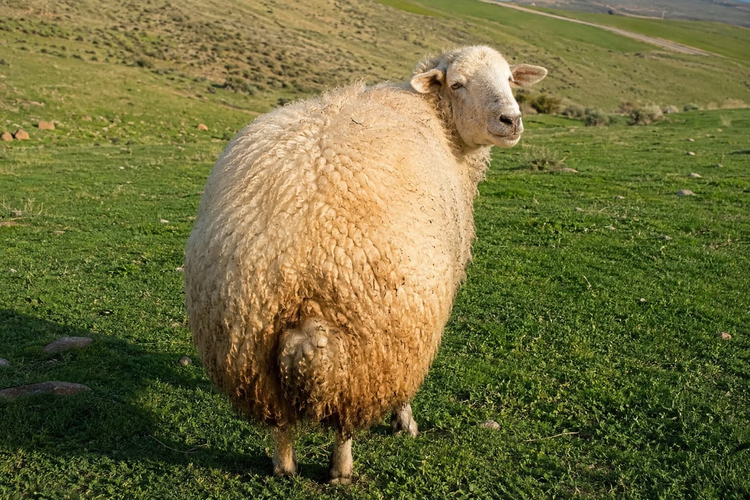
Iran’s sheep population is overwhelmingly fat-tailed — breeds like Baluchi and Mehraban carry a substantial fat deposit in the tail, known locally as دنبه (dombeh), that has been a staple rendering and cooking fat across Iranian and broader Middle Eastern, Central Asian, and South Asian cuisine for generations. That scale of supply, tied to established Halal slaughter practice, makes Iran a natural sourcing origin for importers, Halal food processors, and ethnic food distributors looking for frozen lamb/sheep tail fat at commercial volume.
This is a more specialized, lower-volume sourcing category than a mainstream commodity — the buyer base is narrower (Halal food manufacturers, ethnic grocery/foodservice distributors, rendering and specialty-fat processors) and the compliance bar is real: animal-origin products carry veterinary health certificate requirements that vary by destination country, on top of standard export documentation. IranLocalize exists to make that sourcing safe and manageable for a foreign buyer: verified abattoirs, correct documentation gathered upfront, and shipment-level quality control.
Product Overview & Use Cases
Lamb/sheep tail fat is the fat deposit removed from the tail of fat-tailed sheep breeds during slaughter and processing, typically supplied frozen for export. Common buyer uses:
- Halal food manufacturing — rendered fat/tallow for cooking oil blends, sausage and processed meat production
- Ethnic foodservice & butchery — direct culinary use (kabob, stews) in Middle Eastern, Central Asian, and South Asian cuisine
- Rendering/fat processing — as a feedstock for further processing into cooking fat products
Source Breeds & Fat Characteristics
- Baluchi: Iran’s most widespread fat-tailed breed, raised across the arid central and eastern regions — a medium-size breed well adapted to marginal grazing land.
- Mehraban: raised primarily in Hamedan province in western Iran, a fat-tailed breed used mainly for meat production.
- Most Iranian sheep breeds are fat-tailed (a notable exception, Zel, is not) — giving Iran’s abattoir sector consistent access to tail fat as a co-product of routine lamb/mutton slaughter, rather than a specialty niche cut.
Buyer’s-perspective note: tail fat quantity and quality vary by breed, age, and feeding regime — if your process needs a consistent fat yield or composition, specify the breed(s) you want sourced from rather than accepting unspecified mixed-origin supply.
Quality, Compliance & Documentation
This category carries real documentation requirements beyond a standard food-export shipment:
- Halal certification: slaughter and handling certified to Islamic dietary law — essential for the primary buyer base in this category.
- Veterinary health certificate: required for essentially all animal-origin exports; the exact form and content is set by the destination country’s import authority, and must be arranged with the exporting country’s veterinary/agricultural authority in advance — this is the single most common hold-up point for first-time buyers of animal-origin products and should be confirmed before finalizing any order.
- HACCP: food safety management certification at the processing facility.
- Cold chain integrity: frozen storage and transport at approximately -18°C to -20°C maintained from processing through to destination — confirm the exporter’s cold storage and reefer container capability, not just their abattoir certification.
Non-negotiable truth (buyer’s perspective): do not finalize a purchase order before confirming your destination country actually permits import of this product category from Iran, and what specific veterinary/health certificate format it requires — this varies by country and changes over time, and is the first thing to lock down, before specs or pricing.
Packaging & Marking
- Standard export packaging: individual pieces typically 2-6 kg, packed into cartons around 20 kg gross weight, plastic-wrapped for frozen distribution.
- Carton marks: product description, weight (NW/GW), production/freeze date, batch/lot number, Halal certification mark, Made in Iran, destination-market labeling as required.
- Private label: custom carton branding and labeling available for larger, recurring orders.
MOQ, Lead Time & Incoterms
- MOQ: commonly 5-10 metric tons for a standard order; smaller trial quantities negotiable with individual abattoirs/suppliers.
- Lead time: bulk/standard packaging ships faster; custom private-label packaging adds production and approval time.
- Incoterms: FOB Bandar Abbas or other applicable Iranian port, most common; CIF/CPT to destination port negotiable case-by-case. Reefer container logistics (maintaining cold chain) are a core part of the shipping plan, not an afterthought.
- Payments: Wire transfer (T/T) standard; L/C available case-by-case for larger volume commitments.
Coaching, not comfort: a supplier who can’t clearly explain how they’ll produce your destination country’s specific veterinary health certificate is a bigger risk than one quoting a slightly higher price — for animal-origin products, documentation failure at customs is the most common cause of a rejected or delayed shipment, not a quality defect.
How IranLocalize Reduces Your Risk
IranLocalize operates as your sourcing, verification, and compliance arm on the ground in Iran:
- Abattoir/supplier screening: Halal and HACCP certification status, export track record, cold storage capability.
- Documentation setup: confirming your destination country’s veterinary health certificate requirements and coordinating with the exporter and relevant Iranian authorities before production, not after.
- Negotiation & contracting: hard specs (breed, piece size, packaging), Incoterms, and delivery terms in writing.
- Pre-shipment inspection (PSI): cold chain verification, weight checks, packaging and labeling confirmation before loading.
- Logistics: reefer container booking and export documentation aligned to destination-market import requirements.
- Single point of contact: one project manager on WhatsApp/email throughout.
RFQ Checklist (Send This to Get a Precise Quote)
- Destination country: so we can confirm import eligibility and veterinary certificate requirements upfront
- Breed preference: Baluchi, Mehraban, or unspecified/mixed
- Piece size: target weight range per piece
- Packaging: standard bulk carton, or custom/private-label
- Quantity: total tonnage + one-off or recurring cadence
- Certifications required: Halal, HACCP, and any destination-specific documentation
- Incoterms: FOB/CIF with port for freight and reefer logistics calculation
- Target lead time: delivery window needed
Buyer Mistakes (and How to Avoid Them)
- “Ordering before confirming import eligibility.” Result: cargo held or rejected at destination customs because the product category isn’t permitted, or the wrong certificate was issued. Fix: confirm your country’s import rules and required veterinary certificate format before placing the order — first, not in parallel.
- “No cold chain verification.” Result: quality/safety issues from a broken cold chain between processing and arrival. Fix: confirm reefer container booking and cold storage capability as part of supplier screening, not just Halal/HACCP paperwork.
- “Unspecified breed/mixed sourcing.” Result: inconsistent fat yield or characteristics batch to batch. Fix: specify breed(s) if your process needs consistency.
- “Assuming standard export docs are enough.” Result: missing the destination-specific veterinary health certificate that animal-origin products require beyond standard commercial documentation. Fix: treat certificate requirements as a dedicated compliance step, confirmed early, not a checkbox at shipping time.
FAQs
What is “dombeh” and is it the same as lamb tail fat? Yes — دنبه (dombeh/donbeh) is the Persian name for the fat-tail deposit from Iran’s fat-tailed sheep breeds; it’s the same product referred to as lamb or sheep tail fat in export markets.
Which Iranian sheep breeds produce tail fat? Most Iranian sheep breeds are fat-tailed, with Baluchi (central/eastern Iran) and Mehraban (Hamedan province, western Iran) among the most significant for commercial supply. Zel is a notable exception without a fat tail.
Does my country actually allow importing this product from Iran? This depends entirely on your country’s animal-product import rules, which vary and change over time — confirm this before finalizing any order; we help verify current requirements as part of the sourcing process.
What certification should we expect from a supplier? Halal certification and HACCP food safety certification at minimum, plus a veterinary health certificate matching your destination country’s specific requirements — the certificate format is not one-size-fits-all.
How is it shipped — fresh or frozen? Frozen is standard for export, maintained at approximately -18°C to -20°C from processing through delivery via reefer container.
Can we get custom packaging or piece sizes? Yes — private-label packaging and specific piece-size ranges are available for larger or recurring orders, typically with a longer lead time than standard bulk packaging.
Collaboration Workflow with IranLocalize
- Send RFQ using the checklist above, including your destination country.
- Import eligibility & certificate confirmation — verified before anything else proceeds.
- Supplier shortlist (2-3 verified, Halal/HACCP-certified abattoirs matched to your specs).
- Contract — hard specs, Incoterms, and delivery terms in writing.
- Production & pre-shipment inspection — cold chain, weight, and labeling verification.
- Shipping & documents — reefer logistics and full documentation aligned to your destination market.
- After-sales — reorder planning for recurring volume once the first shipment clears.
Executive Summary
- Why Iran: a large base of fat-tailed sheep breeds (Baluchi, Mehraban) gives consistent supply of tail fat as a routine co-product of Halal slaughter.
- What matters: confirming destination-country import eligibility and veterinary certificate requirements first — before specs, packaging, or price.
- Why IranLocalize: unbiased abattoir verification, documentation handled upfront, a negotiator on your side, and cold-chain-aware shipment inspection.
Ready to evaluate lamb tail fat suppliers in Iran? Share your RFQ, including your destination country. We’ll confirm import requirements, deliver verified supplier options, and firm timelines.