

Key Products
Plastic Sauce Bottles from Iran
Why Source Plastic Sauce Bottles from Iran?
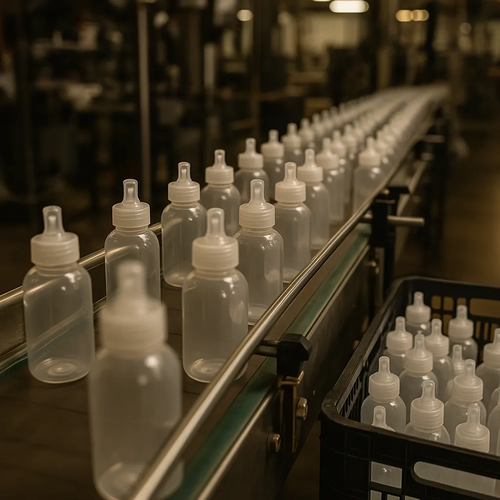
Squeeze sauce bottles – the flip-top or nozzle-cap plastic packaging used for ketchup, mayonnaise, salad dressings, and similar condiments – draw on Iran’s genuinely established plastic packaging industry, backed by direct domestic access to PET and HDPE resin through the country’s petrochemical sector. Iranian manufacturers already export PET bottles and preforms at real volume into Iraq, Afghanistan, the Persian Gulf, and beyond, with buyers as far as India sourcing PET/preform bottles from Iranian producers.
For B2B buyers – food and condiment manufacturers, private-label sauce brands, packaging distributors – that upstream resin access translates into genuine cost competitiveness, not just a low headline quote. If you’re comparing origins purely on unit price, several regions compete on standard sauce bottles. If you need food-grade material verified for your product, a reliable cap/nozzle seal, and a manufacturer who can handle your branding requirements, that’s where a verified Iranian producer and disciplined QC earn their keep. IranLocalize exists to make that sourcing simple for a foreign buyer: verified manufacturers, clear specs, and shipment-level quality control.
Product Overview & Use Cases
- Condiment packaging – ketchup, mayonnaise, mustard, salad dressings, and similar sauces needing controlled, squeeze-dispensed portions.
- Private-label sauce brands – custom bottle shape, cap style, and labeling for a brand’s own condiment line.
- Foodservice & bulk packaging – larger-format squeeze bottles for restaurant/catering use, alongside standard retail sizes.
Types & Specifications
- Material: PET (clear, rigid, good barrier properties) is common for retail-facing sauce bottles where product visibility matters; HDPE (semi-rigid, often used with a more flexible squeeze wall) suits bottles designed for a firmer squeeze dispense. Both must be food-grade, BPA-free material – confirm this explicitly, not just assumed from “plastic bottle” alone.
- Cap style: flip-top caps (a hinged lid over a dispensing spout, common for retail ketchup/mayo-style bottles) and nozzle caps (a narrower, more controlled dispensing tip, common for finer sauces or dressings) are the two standard choices – pick based on your product’s viscosity and desired dispense control.
- Size range: commonly 300ml, 500ml, and 1L, covering standard retail and foodservice condiment packaging; custom sizes available for private-label or bulk formats.
- Wall design: a squeezable wall thickness/rigidity balance is the core engineering point of this bottle type – too rigid and it won’t dispense with a normal squeeze; too thin and it can collapse or crack with repeated use.
Buyer’s-perspective note: cap seal reliability – not just the bottle body – is where quality actually shows up in the field. A bottle that looks identical to a higher-grade one can leak or drip inconsistently if the cap/nozzle fitment isn’t precisely toleranced. Test the assembled bottle-and-cap combination, not the bottle alone.
Quality, Compliance & Testing
- Food-grade material certification: confirmed against your destination market’s food-contact packaging standard – requirements vary by country, so confirm this specifically rather than assuming a general “food safe” claim covers it.
- Cap/seal integrity testing: drop and squeeze testing to verify the cap seals reliably under normal use and doesn’t leak or drip unpredictably.
- Wall thickness consistency: checked across a full production batch – inconsistent wall thickness leads to inconsistent squeeze/dispense behavior bottle to bottle.
- Clarity/color consistency (PET): relevant for retail-facing bottles where product visibility and brand presentation matter.
Packaging & Marking
- Bulk carton packaging: bottles typically packed in cartons by quantity for efficient container loading, often shipped separately from caps until final assembly (confirm with your manufacturer which is more practical for your order).
- Carton marks: bottle size, material (PET/HDPE), cap style, quantity, NW/GW, batch/lot, Made in Iran.
- Custom branding: printed or labeled branding, custom colors, and custom bottle shapes available for private-label orders – typically at a higher MOQ and longer lead time than stock designs.
MOQ, Lead Time & Incoterms
- MOQ: varies by whether you’re ordering a stock bottle design or a custom mold – stock designs have lower practical minimums; a custom bottle shape/mold requires a significantly higher volume commitment to justify tooling cost.
- Lead time: stock designs ship fastest; custom molds add substantial lead time upfront for tooling, though subsequent reorders are fast once the mold exists.
- Incoterms: FOB Bandar Abbas most common for sea freight; established overland routes to Iraq and Afghanistan for buyers in those markets.
- Payments: Wire transfer (T/T) standard; L/C available case-by-case for larger orders.
Coaching, not comfort: a quote significantly below market range for stated food-grade PET/HDPE is worth verifying independently – resin grade substitution is not visible on inspection and only becomes a problem once a regulator or a customer complaint raises it.
How IranLocalize Reduces Your Risk
IranLocalize operates as your sourcing, verification, and QC arm on the ground in Iran:
- Manufacturer screening: production capacity, resin sourcing, mold-making capability for custom designs, export track record.
- Pre-order sampling: physical samples tested for cap seal integrity and squeeze/dispense behavior before committing to volume.
- Negotiation & contracting: hard specs (material, size, cap style, food-grade certification), Incoterms, and delivery terms in writing.
- Pre-shipment inspection (PSI): batch sampling for wall thickness consistency and cap fitment before loading.
- Logistics & documentation: export docs and container loading oversight.
- Single point of contact: one project manager on WhatsApp/email throughout.
RFQ Checklist (Send This to Get a Precise Quote)
- Material: PET or HDPE
- Cap style: flip-top or nozzle
- Size: 300ml, 500ml, 1L, or custom
- Stock design or custom mold: confirm which, since MOQ and lead time differ significantly
- Branding: printed, labeled, or plain bottles
- Quantity: total volume + one-off or recurring cadence
- Destination + Incoterms: FOB/CIF with port for freight calculation
Buyer Mistakes (and How to Avoid Them)
- “Testing the bottle without the cap.” Result: a bottle that looks fine alone but leaks or drips inconsistently once assembled with its cap. Fix: test the full assembled bottle-and-cap combination under real squeeze conditions.
- “Assuming ‘food safe’ covers your destination market’s actual standard.” Result: a compliance gap discovered at customs or from a customer complaint. Fix: confirm the specific food-contact packaging standard your market requires, not a general claim.
- “Committing to a custom mold without volume to justify it.” Result: a high upfront tooling cost that doesn’t pay back at your actual order volume. Fix: start with a stock design at lower MOQ, and commit to a custom mold only once volume justifies it.
FAQs
PET or HDPE – which should we choose? PET suits retail bottles where product visibility matters; HDPE suits bottles designed for a firmer, more controlled squeeze. Tell us your product and target market and we’ll help you decide.
Flip-top or nozzle cap? Flip-top suits thicker sauces like ketchup or mayonnaise; nozzle caps give finer control, often preferred for thinner dressings. This depends on your product’s viscosity.
Can we get a custom bottle shape for our brand? Yes, but a custom mold requires a significant volume commitment to justify tooling cost – we’ll help you weigh that against starting with a stock design.
What sizes are standard? 300ml, 500ml, and 1L cover most retail and foodservice condiment packaging; custom sizes are available for private-label or bulk formats.
Is this the same as the general plastic bottles Iran exports? Sauce bottles are a specific sub-category of Iran’s broader plastic bottle industry (see our general plastic bottles from Iran guide) – this page goes deeper on the cap/seal and squeeze-wall specifics that actually matter for condiment packaging.
Can orders recur on a schedule? Yes – once the first order and QC process are validated, we can set up a reorder cadence for recurring production needs.
Collaboration Workflow with IranLocalize
- Send RFQ using the checklist above.
- Manufacturer shortlist (2-3 verified options matched to your material, cap style, and volume needs).
- Sample approval – physical samples tested for cap seal integrity and food-grade compliance.
- Contract – hard specs, Incoterms, and delivery terms in writing.
- Production & pre-shipment inspection – wall thickness and cap fitment verification before loading.
- Shipping & documents – aligned to your destination market’s import requirements.
- After-sales – reorder planning for recurring volume.
Executive Summary
- Why Iran: direct petrochemical access to PET/HDPE resin feeding an established bottle manufacturing base with real export volume.
- What matters: verified food-grade material and reliable cap/seal performance – not the bottle body alone or price.
- Why IranLocalize: unbiased manufacturer verification, precise specs, a negotiator on your side, and rigorous sample/shipment testing.
Ready to evaluate plastic sauce bottle suppliers in Iran? Share your RFQ. We’ll deliver verified manufacturer options, tested samples, and firm timelines.