

Key Products
Plastic Slippers from Iran
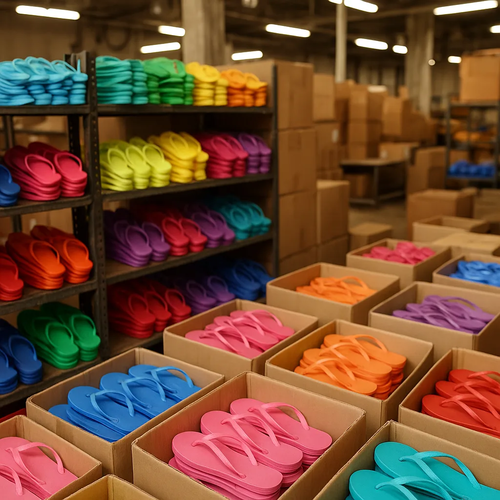
Why Source Plastic Slippers from Iran?
Iran has a genuine, concentrated manufacturing hub for plastic slippers and open-toed summer footwear: Qom province alone exports over $90 million a year of this category, making it one of the province’s largest export lines. That volume moves mainly into Iraq, with meaningful additional volume into the UAE, Central Asia, and Afghanistan – established, repeat destinations rather than one-off orders.
For B2B buyers – footwear distributors, hotel/hospitality suppliers, general merchandise importers – that concentration of manufacturing capacity means real cost efficiency at volume, not just a low headline price from an unproven factory. If you’re comparing origins purely on unit cost, other regions (especially China) compete heavily on this product. If you need consistent sole density, reliable strap/upper attachment, and a manufacturer who delivers on schedule at bulk volume, that’s where a verified Iranian producer earns its keep. IranLocalize exists to make that sourcing simple for a foreign buyer: verified manufacturers, clear specs, and shipment-level quality control.
Product Overview & Use Cases
- General retail footwear – everyday plastic slippers and flip-flops for domestic and export retail.
- Hospitality & hotel amenities – disposable or reusable slippers supplied to hotels, spas, and similar hospitality settings.
- Household & indoor use – bath and household slippers, typically a softer, more cushioned construction than outdoor flip-flops.
- Private-label footwear brands – custom color, strap design, and branding for a distributor’s own footwear line.
Types & Specifications
- Material: PVC (better water resistance, generally lower cost) and EVA (lighter weight, better cushioning, slightly higher cost) are the two standard sole/body materials – match the choice to your product positioning (budget outdoor flip-flop vs. a more cushioned comfort slipper).
- Sole thickness: commonly 8mm and up for standard sandals/flip-flops (thin bath slippers can run as low as 5mm; chunkier platform styles 20mm or more) – confirm the thickness against your target product category and market expectation.
- Weight: a typical target is under 150g per pair for standard flip-flops – heavier construction changes both shipping cost and the product’s comfort positioning.
- Slip resistance: relevant for hospitality/commercial use in wet areas – confirm slip-resistance rating if your buyer segment needs it (e.g. pool/spa slippers).
Buyer’s-perspective note: strap/upper attachment to the sole is the most common failure point in lower-cost slippers – a sole that looks fine on its own can still have a strap that pulls loose after moderate wear. Test the assembled product, not just the sole material.
Quality, Compliance & Testing
- Sole density/hardness consistency: checked across a production batch – inconsistent density affects both comfort and durability.
- Strap/upper bond strength: pull-testing the strap-to-sole attachment, the most common point of field failure.
- Color consistency: relevant for retail-facing products where batch-to-batch color matching matters for brand presentation.
- Weight/thickness consistency: verified against the quoted spec, since this affects both per-unit cost and shipping weight calculations.
Packaging & Marking
- Bulk carton packaging: standard for cost-efficient container shipping, often with mixed sizes/colors per carton by agreement.
- Carton marks: material (PVC/EVA), size range, color assortment, quantity, NW/GW, batch/lot, Made in Iran.
- Custom packaging: individual poly bags, printed header cards, or branded shoe boxes available for retail-facing or private-label orders.
MOQ, Lead Time & Incoterms
- MOQ: varies by manufacturer and customization level – standard designs support lower minimums with mixed colors/sizes; custom molds or branding require higher volume commitments.
- Lead time: commonly 10-18 days after order confirmation for standard designs, depending on MOQ and customization – custom molds add significant upfront lead time.
- Incoterms: FOB Bandar Abbas most common for sea freight; established overland routes to Iraq and Afghanistan given Qom’s existing export relationships with those markets.
- Payments: Wire transfer (T/T) standard; L/C available case-by-case for larger orders.
Coaching, not comfort: a quote notably below the market range for a stated sole thickness/weight is worth verifying on a physical sample – thinner soles or lower-density material are the easiest place to cut cost invisibly in this category.
How IranLocalize Reduces Your Risk
IranLocalize operates as your sourcing, verification, and QC arm on the ground in Iran:
- Manufacturer screening: production capacity, material sourcing (PVC/EVA), export track record, existing markets served.
- Pre-order sampling: physical samples tested for strap bond strength and sole consistency before committing to volume.
- Negotiation & contracting: hard specs (material, sole thickness, size range, color assortment), Incoterms, and delivery terms in writing.
- Pre-shipment inspection (PSI): batch sampling for weight/thickness consistency and packaging verification before loading.
- Logistics & documentation: export docs and container/overland loading oversight aligned to your route.
- Single point of contact: one project manager on WhatsApp/email throughout.
RFQ Checklist (Send This to Get a Precise Quote)
- Material: PVC or EVA
- Product type: flip-flop, bath slipper, hospitality slipper, or platform sandal
- Sole thickness: target range for your product category
- Size range & color assortment: sizes and colors needed per order
- Branding: plain, printed, or custom mold/logo
- Quantity: total volume + one-off or recurring cadence
- Destination + Incoterms: FOB/CIF with port or border crossing for freight calculation
Buyer Mistakes (and How to Avoid Them)
- “Testing the sole material without the assembled strap.” Result: a product that looks fine in the sole sample but has straps that pull loose after moderate wear. Fix: pull-test the fully assembled slipper, not just the sole material alone.
- “Price-only comparison without confirming sole thickness/weight.” Result: a cheaper quote that turns out to be a thinner, lower-density sole than expected. Fix: confirm exact thickness and per-pair weight, and verify on physical samples.
- “Committing to a custom mold before volume justifies it.” Result: high upfront tooling cost that doesn’t pay back at your actual order size. Fix: start with a stock design and mixed color/size assortment, and move to a custom mold once volume justifies it.
FAQs
PVC or EVA – which should we choose? PVC offers better water resistance at lower cost; EVA is lighter and more cushioned at a slightly higher cost. Tell us your target product (budget flip-flop vs. comfort slipper) and market and we’ll help you decide.
What sole thickness is standard? 8mm and up is standard for typical flip-flops/sandals; thinner (around 5mm) for bath slippers, thicker (20mm+) for platform styles.
Can we get custom colors and mixed sizes in one order? Yes – most manufacturers support mixed colors and sizes within a standard design at reasonable MOQs.
What’s a realistic lead time? Commonly 10-18 days after order confirmation for standard designs; custom molds or heavy customization add significant upfront time.
Does Iran have real export experience with this product? Yes – Qom province alone exports over $90 million a year of slippers and open-toed footwear, primarily to Iraq, with additional volume to the UAE, Central Asia, and Afghanistan.
Can orders recur on a schedule? Yes – once the first order and QC process are validated, we can set up a reorder cadence for recurring distribution needs.
Collaboration Workflow with IranLocalize
- Send RFQ using the checklist above.
- Manufacturer shortlist (2-3 verified options matched to your material, design, and volume needs).
- Sample approval – physical samples tested for strap bond strength and sole consistency.
- Contract – hard specs, Incoterms, and delivery terms in writing.
- Production & pre-shipment inspection – weight/thickness verification and packaging checks before loading.
- Shipping & documents – sea or overland route aligned to your destination market.
- After-sales – reorder planning for recurring volume.
Executive Summary
- Why Iran: a genuine, high-volume export hub (Qom province, $90M+/year) with established routes into Iraq, the Gulf, and Central Asia.
- What matters: verified sole density/thickness and strap bond strength – not the sole material or price alone.
- Why IranLocalize: unbiased manufacturer verification, precise specs, a negotiator on your side, and rigorous sample/shipment testing.
Ready to evaluate plastic slipper suppliers in Iran? Share your RFQ. We’ll deliver verified manufacturer options, tested samples, and firm timelines.