
Key Products
Wild Mountain Rhubarb (Rivas) from Iran
Why Source Rivas from Iran?
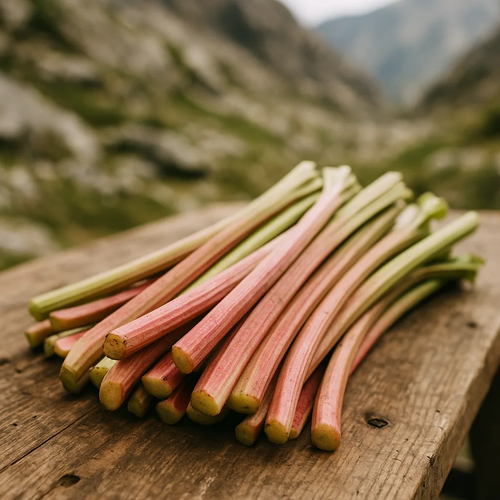
Rivas (ریواس, Rheum ribes) is wild mountain rhubarb – a genuinely different product from the cultivated rhubarb grown commercially in Europe and North America. It grows wild at elevations of roughly 1,000-4,000 meters in Iran’s northwestern mountains (Kurdistan and neighboring provinces), where it’s hand-foraged for a short window each spring, mainly in the weeks around May, as the wild population comes up among rock and cliff terrain rather than in cultivated fields.
That origin is exactly what makes this product different from a standard agricultural export: rivas is not a mass commodity – it’s a rare, high-value specialty item. Supply is inherently limited by what a short wild-foraging season actually yields, which is part of why it commands a real premium price and why it moves by air freight rather than sea container – the volumes involved don’t justify (and the product’s short shelf window doesn’t tolerate) slow bulk shipping. IranLocalize works with local foraging and collection networks to source genuine, fresh rivas and get it to a buyer while it’s still worth having – verified sourcing, careful handling, and air-freight logistics built around a product that has to move fast.
Product Overview & Use Cases
- Specialty produce importers & high-end grocers – a genuinely rare item for buyers who specifically want an authentic, hard-to-source Middle Eastern/Persian ingredient.
- Persian/Middle Eastern restaurants and food service – used in khoresh rivas (a traditional Persian rhubarb stew) and eaten raw with salt as a sharp, refreshing seasonal snack.
- Diaspora and ethnic grocery markets – Iranian, Kurdish, and broader Middle Eastern communities abroad who know this ingredient and can’t easily source it otherwise.
What Makes Rivas Different from Commercial Rhubarb
- Wild-foraged, not cultivated: unlike commercial rhubarb (grown on farms in places like Poland or the Netherlands with predictable year-round or extended-season supply), rivas comes from wild plants collected by hand in mountain terrain – there is no large-scale cultivation to fall back on for volume.
- Genuinely seasonal: the foraging window is short, concentrated in spring (mainly around May) – there is no off-season supply to speak of, and this should be planned for rather than treated as a scheduling inconvenience.
- Scarcity is the product’s value, not a limitation to apologize for: a buyer sourcing rivas is specifically looking for this rarity – price accordingly, and don’t expect (or promise) commodity-scale, year-round volume.
- Stalk characteristics: eaten raw, the stalks have a distinctly sharp, tart flavor (traditionally paired with salt or sumac) – a different flavor profile from the milder cultivated rhubarb most Western buyers know from pies and jams.
Quality & Handling
- Freshness is everything: as a genuinely perishable wild product with a short window from foraging to use, freshness at the point of collection and speed to the buyer matter more than any formal grading system.
- Stalk condition: firm, unblemished stalks with good color, free from wilting or damage from handling – checked at the point of collection and again before shipping.
- Cold handling from collection onward: even for air freight, maintaining a cold chain from the point of foraging through to delivery preserves quality and extends the usable window on arrival.
Packaging & Shipment
- Ventilated crates or cartons: loose or lightly bundled stalks packed to allow airflow, consistent with how fresh rhubarb is generally handled to avoid moisture buildup and spoilage.
- Air freight, by necessity: given the short shelf life and relatively low volumes involved, air freight is the practical shipping method – not sea container, and not something to expect at bulk-commodity pricing.
- Marking: origin and collection date noted on packaging, given how directly freshness ties to value for this product.
Quantity, Lead Time & Terms
- Quantity is inherently limited by the season’s actual foraging yield – this is not a product where you request a large volume and expect it delivered on demand; tell us your target quantity and timeline and we’ll confirm what’s realistically available.
- Lead time: tied to the spring foraging season – outside that window, fresh rivas simply isn’t available, so planning ahead for the season matters more than a standard lead-time quote would for a year-round commodity.
- Shipment: air freight, priced accordingly given the product’s low volume and short shelf life relative to bulk agricultural cargo.
- Payments: Wire transfer (T/T) standard for this order size.
Coaching, not comfort: if a supplier offers to sell rivas in large volume, year-round, at commodity pricing, that’s a sign something doesn’t match the product’s real nature – genuine wild-foraged rivas is scarce and seasonal by definition, and a buyer should expect that reality reflected honestly in both price and availability, not smoothed over.
How IranLocalize Reduces Your Risk
IranLocalize works directly with local foraging and collection networks in Iran’s northwestern mountain regions, rather than through an anonymous reseller:
- Sourcing network verification: confirming genuine wild-foraged origin and realistic seasonal availability before quoting.
- Freshness-first handling: minimizing time between foraging and shipment, with cold handling maintained throughout.
- Honest quantity expectations: telling you upfront what’s realistically available for your timeline, rather than overpromising volume this product can’t deliver.
- Air-freight logistics: arranging the fast shipping this perishable, low-volume product actually needs.
- Single point of contact: one project manager on WhatsApp/email throughout.
RFQ Checklist (Send This to Get a Precise Quote)
- Target quantity: understanding this is season-yield-limited, not an on-demand bulk order
- Timing: confirm you’re ordering within or ahead of the spring foraging season
- Intended use: food service, retail, or personal/community import
- Destination + air freight routing: for accurate shipping cost and transit time
- Flexibility on exact ship date: given dependence on the actual foraging/harvest timing that season
FAQs
Is rivas the same as the rhubarb sold in Western grocery stores? No – rivas (Rheum ribes) is a wild mountain species, hand-foraged in Iran’s northwestern mountains, with a sharper flavor and a genuinely different supply chain than cultivated commercial rhubarb (Rheum rhabarbarum) grown on farms elsewhere.
Why is it so expensive relative to regular rhubarb? Because it’s wild-foraged in a short seasonal window from mountain terrain, not farmed at scale – scarcity is inherent to the product, not an artificial markup.
Why does it ship by air instead of sea container? Given its short shelf life and the relatively low volumes involved, air freight is the only practical way to get it to a buyer while it’s still fresh and worth having.
When is it actually available? Mainly in spring, concentrated around the weeks near May, tied to when the wild plants are actually ready for foraging in the mountains – there’s no meaningful off-season supply.
Can we get a large, recurring volume? Volume is genuinely limited by what that season’s foraging yields – tell us your target quantity and we’ll give you an honest answer about what’s realistically available, rather than promising commodity-scale volume this product doesn’t support.
Collaboration Workflow with IranLocalize
- Reach out ahead of the spring season with your target quantity and destination.
- Realistic availability check – we confirm what volume is genuinely achievable for your timeline.
- Agreement on price and terms in writing, reflecting the product’s seasonal/scarce nature honestly.
- Foraging & freshness-first handling as the season’s harvest comes in.
- Air freight shipment arranged and tracked to your destination.
- After-sales – if it went well, we can plan ahead together for next season’s window.
Executive Summary
- Why Iran: rivas is a genuine wild Persian/Kurdish mountain specialty with real cultural roots and a flavor Western buyers can’t easily source elsewhere.
- What matters: honesty about scarcity, seasonality, and price – this is a rare specialty item, not a bulk commodity, and it should be sourced and sold with that reality front and center.
- Why IranLocalize: a direct relationship with local foraging networks, freshness-first handling, and straight answers about what’s actually available.
Interested in sourcing genuine wild mountain rivas from Iran? Reach out with your target quantity and timing, and we’ll give you an honest read on what’s available this season.