

Key Products
Sweet Cream Butter from Iran
Why Source Sweet Cream Butter from Iran?
Iran has quietly become one of the world’s more significant butter exporters – ranking among the top five globally by export volume, with exports growing sharply in recent years as domestic dairy processing capacity has scaled up. That’s backed by a fully integrated dairy supply chain running from raw milk production through to finished, packaged butter, with several large Iranian dairies operating modern processing lines, in-house quality control labs, and hygienic packaging systems built for export, not just the domestic market.
For B2B buyers – foodservice distributors, bakery and confectionery manufacturers, dairy repackers, and import wholesalers – that scale and quality infrastructure means real capacity at competitive pricing, backed by proper Halal and food-safety certification for markets where that matters. IranLocalize exists to make sourcing from that supply base straightforward for a foreign buyer: verified dairies, clear specs, enforceable contracts, and cold-chain-aware shipment QC.
Product Overview & Use Cases
Sweet cream butter is churned from pasteurized sweet (non-soured) cream, distinct from cultured/lactic butter – the standard bulk format for industrial and foodservice buyers rather than retail-pack consumer butter. Common buyer segments:
- Bakery & confectionery manufacturing – a core fat input where consistent quality batch-to-batch matters
- Foodservice & catering distribution – bulk supply for restaurants, hotels, and institutional kitchens
- Dairy repackers/private label – bulk block butter repackaged into retail or foodservice-branded portions
- Further processing – as an ingredient in other dairy or food manufacturing
Specifications & Grades
- Fat content: standard sweet cream butter runs 82% milk fat minimum, with moisture capped around 16% and up to 2% milk solids (non-fat) – this 82% benchmark is the industry-standard spec buyers should expect and verify against, not just take on trust.
- Salted vs. unsalted: unsalted (“sweet cream”) is the default for bakery/confectionery use where salt content needs to stay under the buyer’s own control; salted variants are available for foodservice/direct-use applications.
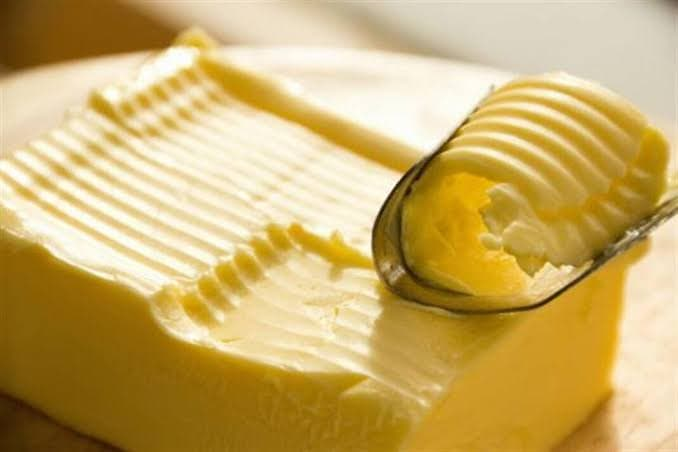
- Color & texture: consistent pale-yellow color and smooth, uniform texture across a full production batch – a key visual QC checkpoint alongside lab-verified fat content.
Quality, Compliance & Certification
- Halal certification: standard requirement for this buyer base, particularly Middle Eastern and broader Islamic-market importers.
- HACCP: food safety management certification at the processing facility – confirm current certification status and scope, not just historical claims.
- Fat content verification: lab-confirmed fat percentage against the quoted spec, since this is the single number that most directly affects a bakery/confectionery buyer’s own product cost and consistency.
- Cold chain integrity: butter is temperature-sensitive throughout transport – confirm the exporter’s cold storage and reefer container capability as part of supplier screening, not an afterthought at shipping time.
Packaging & Shelf Life
- Standard export format: 25 kg polyethylene-wrapped blocks, one block per corrugated carton – the standard bulk B2B format used across the industry, including by Iranian exporters.
- Carton marks: product name, fat content, net/gross weight, production and expiry dates, batch/lot number, Halal certification mark, Made in Iran.
- Shelf life: frozen storage (well below 0°F / around -18°C) extends shelf life to 12-18 months; refrigerated (non-frozen) storage gives a shorter window, typically a few months – confirm which storage condition your logistics chain and end use require.
MOQ, Lead Time & Incoterms
- MOQ: commonly starts around 1 metric ton for smaller trial orders, scaling to full container loads (multiple tons) for recurring commercial volume.
- Lead time: depends on whether butter is coming from existing frozen stock or requires fresh production runs timed to your order – confirm against your delivery window early.
- Incoterms: FOB Bandar Abbas most common; CIF/CPT to destination port negotiable case-by-case. Reefer container booking is a core part of the shipping plan given the product’s cold-chain requirement.
- Payments: Wire transfer (T/T) standard; L/C available case-by-case for larger volume commitments.
Coaching, not comfort: a quote noticeably below the market range for stated 82% fat content is worth verifying independently before committing – fat content and moisture are exactly where cost-cutting shows up first in bulk dairy fat products.
Price & TCO Considerations
- Where Iran is competitive: a large, modern domestic dairy processing base gives genuine cost advantages at export scale, reflected in Iran’s fast-growing export volumes to neighboring and regional markets.
- Real cost comparison: landed cost should weigh verified fat content and consistent cold-chain handling against FOB price alone – a cheaper block that arrives with moisture above spec or a broken cold chain is a false saving.
- Supply risk: verified dairies with real HACCP/Halal certification and demonstrated cold-chain capability remove the most common source of dispute in bulk dairy trade.
How IranLocalize Reduces Your Risk
IranLocalize operates as your sourcing, verification, and QC arm on the ground in Iran:
- Dairy screening: production capacity, Halal/HACCP certification status, export track record, cold storage infrastructure.
- Pre-order sampling: physical samples from current production, fat content lab-verified against spec.
- Negotiation & contracting: hard specs (fat %, salted/unsalted, packaging, shelf life), Incoterms, and delivery terms in writing.
- Pre-shipment inspection (PSI): cold chain verification, weight and packaging checks, batch documentation review before loading.
- Logistics & documentation: reefer container booking, export docs, and destination-market import paperwork.
- Single point of contact: one project manager on WhatsApp/email throughout.
RFQ Checklist (Send This to Get a Precise Quote)
- Fat content: target percentage (82% standard, confirm if you need a different spec)
- Salted or unsalted: your requirement
- Packaging: standard 25kg block, or custom size/private label
- Quantity: trial order or recurring container-scale volume
- Storage condition needed: frozen (longer shelf life) or refrigerated
- Certifications required: Halal, HACCP, and any destination-specific documentation
- Destination + Incoterms: FOB/CIF with port for freight and reefer logistics calculation
- Target lead time: delivery window needed
Buyer Mistakes (and How to Avoid Them)
- “Fat content taken on faith.” Result: butter arrives below the quoted fat percentage, disrupting recipe consistency for bakery/confectionery buyers. Fix: require lab verification of fat content on samples before committing to a full order.
- “No cold chain confirmation.” Result: quality degradation from a broken cold chain between processing and destination. Fix: confirm reefer container booking and the exporter’s cold storage capability during supplier screening.
- “Assuming certifications are current.” Result: a shipment held at customs over lapsed or unverifiable Halal/HACCP documentation. Fix: request current certification documents directly, not just a general claim of certification.
- “Ignoring shelf-life/storage mismatch.” Result: product arrives with less usable shelf life than expected because storage condition wasn’t matched to your logistics timeline. Fix: specify frozen vs. refrigerated storage upfront based on your actual transit and usage timeline.
FAQs
What’s the difference between sweet cream butter and cultured/lactic butter? Sweet cream butter is churned from pasteurized, non-soured cream – the standard bulk B2B format; cultured (lactic) butter uses fermented cream for a more pronounced tangy flavor, common in some European markets. Tell us which your recipe/market needs.
What fat content should we expect? 82% milk fat is the industry-standard benchmark for sweet cream butter, with moisture capped around 16%. We verify this against lab results, not the supplier’s claim alone.
Is Iranian butter Halal certified? Yes – Halal certification is standard practice among Iranian dairy exporters serving this buyer base; we confirm current certification status as part of supplier screening.
What packaging format is standard for bulk orders? 25kg polyethylene-wrapped blocks, one per corrugated carton, is the standard export format most Iranian dairies and the wider industry use for B2B bulk orders.
How long does it stay fresh during shipping? Frozen storage (around -18°C) gives 12-18 months of shelf life; refrigerated (non-frozen) storage is shorter. We match the storage/shipping plan to your actual logistics timeline.
Can orders recur on a schedule? Yes – once the first order and QC process are validated, we can set up a reorder cadence to match your ongoing volume needs.
Collaboration Workflow with IranLocalize
- Send RFQ using the checklist above.
- Dairy shortlist (2-3 verified, Halal/HACCP-certified options matched to your specs).
- Sample approval – physical samples, fat content lab-verified.
- Contract – hard specs, Incoterms, and delivery terms in writing.
- Production & pre-shipment inspection – cold chain, weight, and documentation verification.
- Shipping & documents – reefer logistics and full paperwork aligned to your destination market.
- After-sales – reorder planning for recurring volume once the first shipment clears.
Executive Summary
- Why Iran: a fast-growing, top-five global butter exporter backed by a fully integrated, modern dairy supply chain.
- What matters: verified fat content (82% benchmark) and a genuinely maintained cold chain – not FOB price alone.
- Why IranLocalize: unbiased dairy verification, certification confirmation, a negotiator on your side, and cold-chain-aware shipment inspection.
Ready to evaluate sweet cream butter suppliers in Iran? Share your RFQ. We’ll deliver verified dairy options, lab-verified samples, and firm timelines.