

Key Products
Brass Water Fittings from Iran
Why Source Brass Water Fittings from Iran?
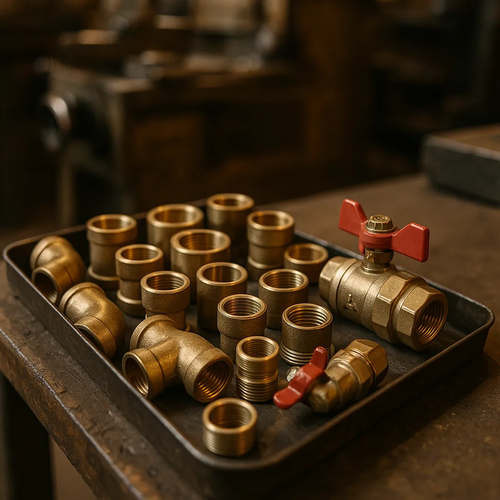
Brass water fittings – elbows, tees, couplings, unions, and valves machined or forged from brass alloy – are a core component of plumbing, heating, and irrigation systems worldwide, valued for corrosion resistance and reliable sealing at threaded joints. Iran has an established brass forging and precision-machining industry feeding both its large domestic plumbing/plastic-pipe manufacturing base (several Iranian companies produce brass fittings alongside PPR pipe and fittings, using the same distribution relationships) and export markets.
For B2B buyers – plumbing/hardware distributors, HVAC suppliers, irrigation equipment importers – sourcing directly from an Iranian manufacturer means access to a full fitting range at competitive cost, backed by the same brass-forging capability serving Iran’s own large plumbing sector. If you’re comparing origins purely on unit price, several regions compete on standard brass fittings. If you need verified alloy composition, correct thread standard, and consistent machining tolerance across a full order, that’s where a verified Iranian manufacturer and disciplined QC earn their keep. IranLocalize exists to make that sourcing simple for a foreign buyer: verified manufacturers, clear specs, and shipment-level quality control.
Product Overview & Use Cases
- Potable water plumbing – elbows, tees, couplings, and unions connecting pipe sections in residential/commercial water supply systems.
- Heating (HVAC) systems – fittings and valves in hot water heating circuits, where brass’s temperature tolerance and sealing reliability matter.
- Irrigation systems – brass’s corrosion resistance makes it a common choice for agricultural water distribution fittings.
- Gas and general industrial fittings – a secondary application wherever a threaded brass connection is specified.
Types & Specifications
- Alloy grade: CW617N (an EN 12165-compliant copper-zinc-lead alloy) is the standard brass grade for plumbing fittings and valves – valued for corrosion resistance and good machinability. Confirm the alloy grade explicitly rather than assuming “brass” alone specifies it.
- Common fitting types: elbows, tees, couplings, unions, reducers, and ball valves – covering the standard range a plumbing or irrigation project needs.
- Thread standard: BSP (common across Europe, the Middle East, and many export markets) vs. NPT (North American standard) – these are not interchangeable; confirm which your destination market uses before ordering.
- Size range: commonly 1/2 inch through 2 inches for standard plumbing/irrigation fittings, covering most residential and light-commercial applications.
- Potable water certification: for drinking water applications, confirm the fitting meets your destination market’s water-contact safety standard (e.g. NSF/ANSI 61 in North America, or the equivalent standard your market requires) – requirements vary by country.
Buyer’s-perspective note: brass alloy composition directly affects both corrosion resistance and machinability – a fitting made from a lower-grade or inconsistent alloy can look identical to CW617N but fail dezincification (anti-zinc-removal) testing over time. This isn’t visible on inspection; it requires lab verification.
Quality, Compliance & Testing
- Alloy composition verification: lab-confirmed CW617N (or equivalent) composition against the quoted spec, not assumed from a visual brass finish.
- Dezincification resistance: relevant for potable water and long-service applications – verified per ISO 6509 or equivalent testing where required.
- Pressure rating: confirmed against the fitting/valve’s intended operating pressure – standard brass ball valves in this category are commonly rated up to PN30/500psi, but always verify against the specific product quoted.
- Thread accuracy: machining tolerance on threads checked for correct fit and seal – inconsistent threading is a common quality shortfall in lower-cost brass fittings.
Packaging & Marking
- Bulk boxed packaging: standard for container shipment, fittings boxed by size/type for efficient handling.
- Carton marks: fitting type, size, thread standard, alloy grade, quantity, NW/GW, batch/lot, Made in Iran.
- OEM/private label: custom packaging and branding available for distributors reselling under their own brand.
MOQ, Lead Time & Incoterms
- MOQ: varies by fitting type and size – standard sizes typically move at container-scale volume for cost-efficient shipping; smaller trial orders negotiable with individual manufacturers.
- Lead time: standard fittings from existing stock ship fastest; custom sizes or thread standards add production time.
- Incoterms: FOB Bandar Abbas most common for sea freight; overland routes available for buyers in neighboring markets.
- Payments: Wire transfer (T/T) standard; L/C available case-by-case for larger orders.
Coaching, not comfort: a brass fitting quote significantly below the market range for stated CW617N grade is worth verifying independently – alloy substitution is not visible on inspection and only shows up as a field failure (or a failed dezincification test) later.
How IranLocalize Reduces Your Risk
IranLocalize operates as your sourcing, verification, and QC arm on the ground in Iran:
- Manufacturer screening: production capacity, alloy sourcing, export track record, existing certification status.
- Pre-order sampling: physical samples lab-tested for alloy composition and pressure rating before committing to volume.
- Negotiation & contracting: hard specs (alloy grade, thread standard, size range), Incoterms, and delivery terms in writing.
- Pre-shipment inspection (PSI): random-sample alloy/thread verification and packaging inspection before loading.
- Logistics & documentation: export docs and container loading oversight.
- Single point of contact: one project manager on WhatsApp/email throughout.
RFQ Checklist (Send This to Get a Precise Quote)
- Fitting types needed: elbows, tees, couplings, unions, valves, or a full range
- Alloy grade: CW617N or your specified equivalent
- Thread standard: BSP or NPT
- Size range: 1/2” to 2”, or your specific project sizes
- Application: potable water, heating, irrigation, or industrial
- Certification needed: any destination-market water-contact safety standard
- Quantity: trial order or container-scale volume
- Destination + Incoterms: FOB/CIF with port for freight calculation
Buyer Mistakes (and How to Avoid Them)
- “Assuming ‘brass’ alone specifies the alloy.” Result: a fitting that looks correct but doesn’t meet CW617N composition, risking dezincification failure over time. Fix: specify and verify the exact alloy grade, not just “brass” generically.
- “Wrong thread standard for the destination market.” Result: incompatible connections discovered during installation. Fix: confirm BSP vs. NPT against your market’s standard before ordering.
- “No potable water certification check.” Result: a fitting that doesn’t meet your destination market’s drinking-water safety requirement. Fix: confirm the specific certification your market requires before finalizing the order.
- “Price-only comparison across suppliers.” Result: an unverified alloy substitution behind an unusually low quote. Fix: lab-verify alloy composition on samples before committing to volume, especially at a notably low price.
FAQs
What is CW617N and why does it matter? CW617N is the EN 12165-compliant copper-zinc-lead brass alloy standard for plumbing fittings and valves – it’s the grade to specify and verify, since “brass” alone doesn’t guarantee this composition.
BSP or NPT thread – which do we need? Depends on your destination market – BSP is standard across Europe, the Middle East, and many export markets, while NPT is the North American standard. These are not interchangeable.
Can Iranian manufacturers supply potable-water-certified fittings? Certification requirements vary by destination country – tell us your market and required standard (e.g. NSF/ANSI 61) and we’ll confirm what the manufacturer needs to provide.
What size range is typically available? 1/2 inch through 2 inches covers most standard plumbing and irrigation fitting needs; larger or custom sizes are available case-by-case.
What’s a realistic MOQ? Standard sizes typically move at container-scale volume for cost efficiency; smaller trial orders are negotiable with individual manufacturers.
Can orders recur on a schedule? Yes – once the first order and QC process are validated, we can set up a reorder cadence for recurring distribution or project needs.
Collaboration Workflow with IranLocalize
- Send RFQ using the checklist above.
- Manufacturer shortlist (2-3 verified options matched to your alloy, thread, and volume needs).
- Sample approval – physical samples lab-tested for alloy composition and pressure rating.
- Contract – hard specs, Incoterms, and delivery terms in writing.
- Production & pre-shipment inspection – alloy/thread verification and packaging checks before loading.
- Shipping & documents – aligned to your destination market’s import requirements.
- After-sales – reorder planning for recurring volume.
Executive Summary
- Why Iran: an established brass forging and machining base feeding both a large domestic plumbing sector and export markets, at competitive cost.
- What matters: verified CW617N alloy composition and correct thread standard – not a generic “brass” claim or price alone.
- Why IranLocalize: unbiased manufacturer verification, precise specs, a negotiator on your side, and rigorous sample/shipment testing.
Ready to evaluate brass water fitting suppliers in Iran? Share your RFQ. We’ll deliver verified manufacturer options, lab-tested samples, and firm timelines.
Sourcing a full plumbing system rather than just brass fittings? See our guides to plastic plumbing fittings & valves and five-layer composite water pipe from Iran.