

Key Products
Plastic Plumbing Fittings & Valves from Iran
Why Source Plastic Plumbing Fittings from Iran?
Iran’s abundant natural gas reserves and advanced petrochemical infrastructure give it direct, low-cost domestic access to the raw polymers – polypropylene (PP), PVC, and polyethylene – that plastic plumbing products are made from. That upstream advantage, combined with an established manufacturing base producing PPR pipes and fittings, PVC pipes and fittings, and molded plastic valves, makes Iran a genuinely competitive origin for construction and irrigation supply buyers, not just a low-price alternative.
For B2B buyers – plumbing/hardware distributors, construction supply importers, irrigation and agriculture equipment suppliers – that combination of raw material access and manufacturing scale means real cost and volume advantages. IranLocalize exists to make sourcing from that base straightforward for a foreign buyer: verified factories, clear specs by product category, enforceable contracts, and shipment-level QC.
Product Overview & Use Cases
Iranian plastic plumbing manufacturing spans several distinct product families:
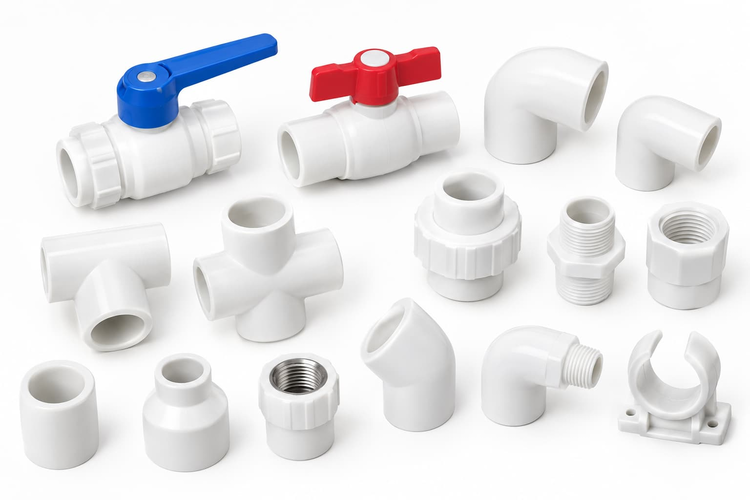
- PPR pipes and fittings – polypropylene random copolymer pipe systems for hot and cold water supply, widely used in residential and commercial plumbing.
- PVC pipes and fittings – rigid PVC for water supply, drainage, and sewage systems, valued for chemical and water resistance.
- Plastic valves – ball valves, check valves, and simple molded valves (including basic outdoor water outlets like garden taps/hose bibs) for water system control.
- HDPE pipe systems – for larger-scale water infrastructure and industrial applications.
Buyer’s-perspective note: these product families use different materials and serve different pressure/temperature requirements – PPR is standard for hot water lines where PVC typically isn’t rated, while PVC is often preferred for drainage/sewage. Confirm which family your project actually needs before shortlisting suppliers, since not every factory covers all categories equally well.
Types & Specifications
- PPR fittings: rated for both hot and cold water systems; standard sizing follows international PPR pipe diameter (mm) and pressure class (PN) conventions – confirm the PN rating matches your system’s operating pressure and temperature.
- PVC fittings: rigid PVC compound, commonly used for water supply and drainage; check chemical resistance and pressure rating against your specific application (potable water vs. drainage/sewage have different requirements).
- Valves: ball valves and check valves in PP or PVC bodies for water system control; simple molded valves for lower-pressure applications like irrigation and outdoor taps.
- Thread/connection standards: BSP (common across Europe, the Middle East, and many export markets) vs. NPT (North American standard) – confirm which your destination market uses, as this is not interchangeable.
Quality, Compliance & Testing
- Pressure rating (PN class) verification: lab-confirmed rating against the quoted spec for PPR and pressure-rated PVC products.
- Material grade consistency: resin grade and wall thickness consistency across a full production batch.
- Potable water suitability: if your application involves drinking water supply, confirm the material and any relevant food/water-contact-safe certification for your destination market – requirements vary by country.
- Leak/seal testing: joint and valve seal integrity under rated operating pressure.
Packaging & Marking
- Standard export packaging: bundled pipes with end caps, boxed fittings and valves, palletized for container loading.
- Carton/pallet marks: product type, size/pressure rating, thread standard, quantity, NW/GW, batch/lot, Made in Iran.
- Private label: custom packaging and branding available for distributors reselling under their own brand.
MOQ, Lead Time & Incoterms
- MOQ: varies by product family – pipes and high-volume fittings typically move at container-scale volume; valves and specialty items may have lower practical MOQs depending on the factory.
- Lead time: standard stock sizes ship fastest; custom specifications or private-label packaging add production time.
- Incoterms: FOB Bandar Abbas most common for sea freight; overland/rail routes available for buyers in neighboring markets given Iran’s established export routes to Iraq, the Caucasus, and Central Asia.
- Payments: Wire transfer (T/T) standard; L/C available case-by-case for larger orders.
Coaching, not comfort: a pressure-rated product quoted well below market range is worth verifying independently – wall thickness and resin grade are exactly where cost gets cut when price is negotiated in isolation from spec.
How IranLocalize Reduces Your Risk
IranLocalize operates as your sourcing, verification, and QC arm on the ground in Iran:
- Factory screening: product family specialization (PPR vs. PVC vs. valves), production capacity, export track record.
- Pre-order sampling: physical samples tested against pressure rating and material spec before committing to volume.
- Negotiation & contracting: hard specs (material, PN class, thread standard, sizing), Incoterms, and delivery terms in writing.
- Pre-shipment inspection (PSI): batch sampling, pressure/seal testing, and packaging verification before loading.
- Logistics & documentation: export docs and container/overland loading oversight aligned to your route.
- Single point of contact: one project manager on WhatsApp/email throughout.
RFQ Checklist (Send This to Get a Precise Quote)
- Product family: PPR pipe/fittings, PVC pipe/fittings, valves, or a mix
- Sizing & pressure class: diameters and PN rating needed
- Thread standard: BSP or NPT, where applicable
- Application: potable water, drainage/sewage, irrigation, or industrial
- Quantity: total volume + one-off or recurring cadence
- Destination + route: sea (FOB/CIF port) or overland, with location for freight calculation
- Target lead time: project delivery window
Buyer Mistakes (and How to Avoid Them)
- “Using PVC where PPR is actually required.” Result: product failure in hot water applications PVC isn’t rated for. Fix: confirm the right material family for your specific application (hot water vs. cold water/drainage) before ordering.
- “Wrong thread standard for the destination market.” Result: incompatibility with local pipe/fitting standards on arrival. Fix: confirm BSP vs. NPT against your market’s standard before finalizing the spec.
- “No independent pressure rating verification.” Result: field failures under normal operating pressure that a spec sheet alone didn’t catch. Fix: lab-test samples against the quoted PN class before committing to volume.
- “Assuming one factory covers every product family.” Result: a fitting/valve specialist attempting pipe extrusion outside their real capability, or vice versa. Fix: match the factory’s actual specialization to your specific product needs.
FAQs
What’s the difference between PPR and PVC fittings? PPR (polypropylene random copolymer) is rated for both hot and cold water and is standard for indoor plumbing supply lines; PVC is typically used for cold water supply, drainage, and sewage, and generally isn’t rated for hot water. Tell us your application and we’ll confirm the right material.
BSP or NPT thread – which do we need? Depends on your destination market – BSP is standard across Europe, the Middle East, and many export markets, while NPT is the North American standard. These are not interchangeable.
Can Iranian factories supply potable-water-safe fittings? Yes, but certification requirements for drinking water contact vary by destination country – tell us your market and we’ll confirm what documentation the factory needs to provide.
Do you also supply basic items like garden taps/hose bibs? Yes – see our dedicated plastic hose bibs & garden taps from Iran page for that specific, high-volume product line.
What’s a realistic MOQ? Varies by product family – pipes and common fittings typically move at container-scale volume, while some valves and specialty items have lower practical minimums. Tell us your target volume and we’ll confirm what’s realistic.
Can orders recur on a schedule for an ongoing project? Yes – once the first shipment and QC process are validated, we can set up a reorder cadence matched to your project timeline.
Collaboration Workflow with IranLocalize
- Send RFQ using the checklist above.
- Factory shortlist (2-3 verified options matched to your product family and volume).
- Sample approval – physical samples tested against pressure rating and material spec.
- Contract – hard specs, Incoterms, and delivery terms in writing.
- Production & pre-shipment inspection – batch sampling and pressure/seal testing before loading.
- Shipping & documents – sea or overland route aligned to your destination market.
- After-sales – reorder planning for recurring project volume.
Executive Summary
- Why Iran: direct petrochemical access to PP/PVC resin plus an established manufacturing base spanning PPR, PVC, and molded valve products.
- What matters: matching the right material family and thread standard to your application – not price alone.
- Why IranLocalize: unbiased factory verification, precise technical specs, a negotiator on your side, and rigorous sample/shipment testing.
Ready to evaluate plastic plumbing suppliers in Iran? Share your RFQ. We’ll deliver verified factory options, tested samples, and firm timelines.
Looking for a specific, high-volume item rather than the full product range? See our focused guides to plastic hose bibs & garden taps, decorative linear floor drains for bathroom/shower fit-outs, brass water fittings, and five-layer composite water pipe from Iran.