

Key Products
Manganese Ore from Iran
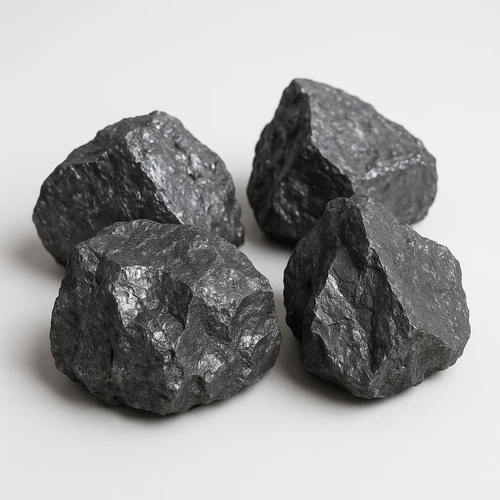
Why Source Manganese Ore from Iran?
Iran has established manganese mining and processing operations concentrated in central Iran and Khorasan province, producing both ore for direct ferroalloy/steel use and feedstock for battery-grade applications. For B2B buyers — steel mills, ferroalloy producers, battery material processors, and trading houses — sourcing directly from Iranian mines and processors means clearer visibility into assay data and impurity control than buying through an intermediary trader.
If you’re buying purely on a spot-price basis, several origins compete on headline price. If you need consistent Mn content, controlled phosphorus/silica levels, and a supplier who can back up assay claims with lab data and physical samples, that’s where a verified Iranian source and disciplined QC process earn their keep. IranLocalize exists to make that sourcing straightforward for a foreign buyer: verified mines/processors, assay verification, enforceable contracts, and shipment-level inspection.
Product Overview & Use Cases
Manganese ore is a critical raw material with two broad end-use paths, determined largely by manganese (Mn) content:
- Steel and ferroalloy production (silico-manganese, ferromanganese) — the largest global use, requiring higher-grade ore
- Battery production (manganese sulfate/manganese oxide feedstock) — increasingly significant demand driver, typically medium-grade ore
- Chemical and industrial applications — smaller-volume uses including cement additives and other industrial chemistry
Grades & Specifications
Manganese ore is graded primarily by Mn (manganese) content, with impurity levels (iron, phosphorus, silica, alumina) as secondary but commercially important specs:
- Low-grade ore (below 35% Mn): Used mainly for low-grade ferroalloys and cement additives — lowest price tier.
- Medium-grade ore (35-45% Mn): The typical range for medium-grade ferroalloys and battery-grade feedstock — a significant and growing demand segment.
- High-grade ore (above 45% Mn): Used for high-grade ferroalloys and steel production — commands the strongest pricing, with 44% Mn widely treated as the metallurgical-grade benchmark buyers reference.
Typical accompanying spec ranges buyers request alongside Mn%: iron (Fe) content, phosphorus (P) — critical for steel-grade buyers since phosphorus is a contaminant in finished steel, silica (SiO2), alumina, and moisture content. Non-negotiable truth (buyer’s perspective): an assay quoting Mn% alone, without phosphorus and silica figures, tells you only half the story a steel or ferroalloy buyer actually needs — always request the full assay panel, not a single headline number.
Quality, Compliance & Testing
- Independent assay verification: third-party lab analysis of Mn%, Fe, P, SiO2, alumina, and moisture on representative samples — not just the supplier’s own certificate.
- Lump size / screening: ore is typically supplied within agreed size ranges (lumps, fines, or a specified mix) — confirm required sizing for your process (sinter feed vs. lump for direct charge).
- Moisture control: affects both shipping weight and processing — moisture content should be specified and verified at loading.
- Sampling protocol: representative sampling per shipment (not a single grab sample) is standard practice for bulk mineral cargo — IranLocalize defines and oversees the sampling plan for every shipment.
Packaging & Shipment
- Bulk/break-bulk: for larger volumes, typically shipped as bulk cargo rather than containerized.
- Containerized (20’ containers): practical for smaller trial orders or buyers without bulk-handling port infrastructure.
- Documentation: certificate of origin, assay/quality certificate, packing list, and any destination-market import documentation required for mineral ore.
MOQ, Lead Time & Incoterms
- MOQ: Trial orders are commonly handled in single 20’ containers; larger recurring volumes move as bulk shipments — actual MOQ depends on the specific mine/processor and ore grade requested.
- Lead time: Depends on whether ore is coming from existing processed stock or requires fresh mining/processing to your specified grade — confirm against your required delivery window early.
- Incoterms: FOB Bandar Abbas most common for container shipments; bulk cargo terms negotiated case-by-case with the mine/processor.
- Payments: Wire transfer (T/T) standard; L/C available case-by-case for larger volume commitments.
Coaching, not comfort: a quote significantly below the market range for a stated Mn% is a signal to verify the assay independently before committing — grade and impurity claims in bulk minerals are exactly where sourcing risk concentrates.
Price & TCO Considerations
- Price scales with Mn% and impurity profile: higher Mn content and lower phosphorus/silica command a real premium — comparing quotes only makes sense once you’ve normalized for the full assay, not just the headline Mn number.
- Real cost comparison: landed cost should account for moisture-adjusted weight, verified assay (avoiding disputes/penalties at destination), and freight — not FOB price alone.
- Supply risk: verified mines/processors with third-party assay backup remove the most common source of dispute in bulk mineral trade: a destination-lab assay that doesn’t match the loading certificate.
How IranLocalize Reduces Your Risk
IranLocalize operates as your sourcing, verification, and QC arm on the ground in Iran:
- Mine/processor screening: production capacity, typical Mn grade range, export track record, existing lab capability.
- Independent assay verification: third-party lab testing of representative samples before you commit to a shipment.
- Negotiation & contracting: hard specs (Mn%, Fe, P, SiO2, moisture, sizing), Incoterms, and penalty/rejection terms in writing.
- Loading supervision & pre-shipment inspection (PSI): representative sampling overseen at loading, weight and moisture verification.
- Logistics & documentation: export docs, certificate of origin, assay certificates, and destination-market import paperwork.
- Single point of contact: one project manager on WhatsApp/email throughout.
RFQ Checklist (Send This to Get a Precise Quote)
- Target Mn% range: low / medium / high grade, with your minimum acceptable Mn%
- Impurity limits: maximum acceptable Fe, P, SiO2, alumina for your process
- Intended use: steel/ferroalloy, battery-grade, or other
- Sizing: lump, fines, or specified size range
- Quantity: trial container(s) or bulk volume + recurring cadence
- Destination + Incoterms: FOB/CIF with port for freight calculation
- Target lead time: delivery window needed
- Assay requirements: third-party lab required, and which lab/standard is acceptable to you
Buyer Mistakes (and How to Avoid Them)
- “Mn% only, no full assay panel.” Result: ore arrives with acceptable Mn% but excess phosphorus or silica that disrupts your process. Fix: always require the full assay (Mn, Fe, P, SiO2, alumina, moisture) before agreeing terms.
- “Trusting the supplier’s own certificate alone.” Result: discrepancy discovered only after the cargo lands at destination, triggering disputes. Fix: independent third-party lab verification on representative samples before shipment.
- “No moisture specification.” Result: disputes over shipping weight vs. dry-basis weight. Fix: specify moisture content terms and verify at loading.
- “Ignoring sizing requirements.” Result: ore unsuitable for your specific furnace/process charge requirements. Fix: confirm lump size or fines specification matches your intended use before ordering.
FAQs
What Mn% should I target for steel/ferroalloy use vs. battery-grade? Steel and high-grade ferroalloy production typically wants ore above 45% Mn; battery-grade and medium-grade ferroalloy applications commonly use ore in the 35-45% Mn range. Tell us your end use and we’ll match the right grade.
Why does phosphorus content matter so much? Phosphorus is a contaminant that carries through into finished steel, degrading its properties — steel-grade buyers in particular set a maximum phosphorus limit as a hard cutoff, independent of Mn%.
Is the ore shipped as lumps or fines? Depends on the mine/processor and your process requirements — both are available; specify which (or a size range) in your RFQ.
Can we get third-party assay verification before shipment? Yes — we arrange independent lab testing on representative samples as part of the standard QC process, not just the supplier’s own certificate.
What’s the typical shipment method — bulk or container? Trial orders commonly move in 20’ containers; larger recurring volumes are typically handled as bulk cargo. We’ll advise based on your target volume.
Can orders recur on a schedule? Yes — once the first shipment and assay/QC process are validated, we can set up a reorder cadence for recurring volume needs.
Collaboration Workflow with IranLocalize
- Send RFQ using the checklist above.
- Mine/processor shortlist (verified options matched to your target grade and volume).
- Sample & assay verification — independent lab testing before you commit.
- Contract — hard specs, Incoterms, and rejection/penalty terms in writing.
- Loading supervision & PSI — representative sampling, weight/moisture verification at loading.
- Shipping & documents — aligned to your destination market’s import requirements.
- After-sales — assay reconciliation support and reorder planning for recurring volume.
Executive Summary
- Why Iran: established mining/processing base across central Iran and Khorasan, covering both high-grade steel/ferroalloy ore and medium-grade battery-feedstock ore.
- What matters: the full assay panel (Mn, Fe, P, SiO2, moisture) verified independently — not a headline Mn% number alone.
- Why IranLocalize: unbiased mine/processor verification, independent assay confirmation, a negotiator on your side, and rigorous loading/shipment oversight.
Ready to evaluate manganese ore suppliers in Iran? Share your RFQ. We’ll deliver verified options, lab-backed assay data, and firm timelines.
Sourcing other Iranian bulk mineral and chemical commodities? See our guide to sulphur bentonite 90% fertiliser, built on Iran’s byproduct sulphur and domestic bentonite.