
Key Products
Iranian Tea: Sourcing Lahijan Black Tea, Grades and Origin Verification
Why Source Tea from Iran – and the Honest Limitation First
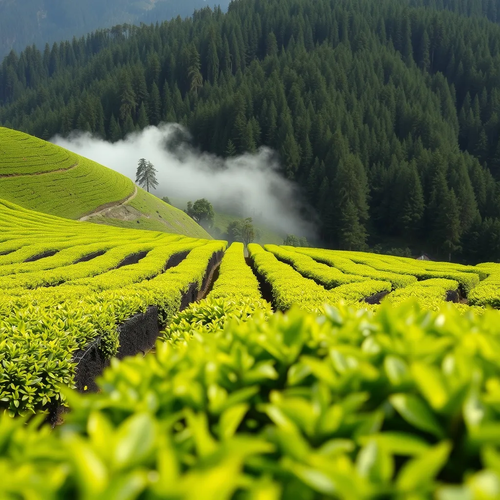
Tea has been grown commercially in Iran since the very end of the nineteenth century, on the humid Caspian slopes of Gilan and Mazandaran, which together account for roughly 90% of the crop. Lahijan, in eastern Gilan, is the industry’s centre. The gardens sit on hillsides in a climate closer to Darjeeling’s foothills than to the Iranian plateau most buyers picture, and the tea they produce is orthodox black tea – rolled leaf, not CTC pellets – with a light, bright, coppery-red liquor and a clean, gently sweet character that drinks well without milk.
Now the limitation, because it shapes everything else on this page and you should hear it before the sales case:
Iran does not produce enough tea for itself. Iran is one of the world’s heaviest tea-drinking nations, consuming on the order of 100,000 tonnes a year, while domestic production covers only around 30% of that demand. The gap is filled by importing tens of thousands of tonnes annually, predominantly from Sri Lanka and India.
Two consequences follow, and they are the whole story of buying Iranian tea:
1. Export volume is structurally limited. Genuine Iranian tea is not a commodity you can order by the hundreds of containers. It is a modest-volume speciality origin. Anyone quoting you unlimited tonnage at a commodity price is not selling you Iranian tea.
2. Origin verification is the central risk. With large volumes of Ceylon and Indian tea physically present in the Iranian market, imported tea being packed, blended or relabelled as Iranian is a real and documented commercial problem. This is the single thing to protect yourself against, and it is what most of this page is about.
Sourced properly, genuine Lahijan tea is a distinctive speciality product with a story and a flavour profile no other origin replicates. Sourced carelessly, you will pay an Iranian premium for Sri Lankan tea.
If you are building a wider Iranian speciality food programme, see also our guides to saffron and dried fruits.
Grades: What the Iranian Names Actually Mean
Iranian tea is graded on leaf size and the proportion of bud and fine leaf, using its own vocabulary rather than the international OP/BOP/FBOP system. You will encounter:
- Sargol (literally “top of the flower”) – the finest grade, from the youngest bud and top leaves. Best aroma, brightest liquor, highest price.
- Momtaz (“premium”) – high grade, slightly larger leaf, fuller and more robust in the cup.
- Shekaste Momtaz (“broken premium”) – broken premium leaf; faster infusion, strong colour, excellent value, widely used domestically.
- Qalam / Baroti – longer, wirier leaf styles.
- Vazin, Zarrin and similar names appear as brand-specific premium designations rather than universal grades.
- Khaki / dust and fannings – the fine siftings, used for tea bags and for cheap blends.
A warning about the terminology: these names are not standardised across factories the way international grades are. Two mills’ “Momtaz” can differ noticeably. Buy against an approved physical control sample, not against a grade name. The sample is the specification; the name is a label.
Harvest Timing – Chin-e Aval and Why It Matters
Iranian tea is plucked in flushes through the season, and the difference between them is large:
- Chin-e Aval (first / spring flush), from roughly late April into May, is the quality peak: delicate, aromatic, sweet, with the finest bud content. This is the tea worth paying for and the tea that holds its fragrance in store.
- Second and summer flushes give higher yield but a coarser, more bitter cup, weaker aroma and higher caffeine.
- Autumn flush is generally the lowest grade.
Ask which flush your lot came from, and get it in the contract. A “Sargol” from the summer flush is not the same product as a spring Sargol, and the price difference in Iran is real. This question, like the CA-or-NA question for apples, tells you more about an offer than almost anything else.
Processing is orthodox throughout: withering, rolling, oxidation, drying, then sorting and grading. Confirm whether drying is indirect hot air or direct-fired, because that choice determines your PAH risk – see below.
Origin Verification – the Part That Actually Protects You
Given the volume of imported tea circulating in Iran, treat origin as a specification to be proven, not a claim to be accepted.
What to require:
- Factory-level traceability – the specific mill, the gardens supplying it, and a lot number traceable back to a plucking date and flush. A supplier who cannot name the factory is a trader, which may be fine, but you then have no origin chain at all.
- Visit or verified visit. The gardens and mills are concentrated around Lahijan and the Gilan coast. A verification visit at the factory during the season, matched against the lot you are buying, is the strongest control available and is the core of what we do here.
- Sensory verification against a known reference. Iranian tea has a recognisable profile – lighter body, bright coppery liquor, a particular gentle sweetness – distinctly different from a Ceylon low-grown or an Assam. An experienced taster can flag a suspect blend immediately. Retain reference samples.
- Documentary consistency. Certificate of Origin, plus the factory’s own production and lot records. Check that claimed production volumes are plausible for the mill’s actual capacity; implausible volume is the commonest tell.
- Isotope or trace-element origin testing where the value of the contract justifies it. It is not cheap and it is not routine, but for a significant programme or a premium retail launch it is available and defensible.
- Beware the price signal. Genuine spring Sargol cannot be cheap. An Iranian-origin offer priced like bulk Ceylon is telling you what it actually is.
Quality, Compliance & Testing
Tea is one of the most residue-scrutinised food categories in the world, for a structural reason: it is consumed dry-weight-tested. Residues concentrate in the dried leaf, and limits are set on the dry product, so a modest field residue becomes a large number in the lab. Three tests matter more here than in most foods:
- Pesticide residues (MRLs). The primary rejection cause for tea globally. Require a broad multi-residue screen against your destination’s MRL list, on the shipped lot, by an accredited laboratory instructed by your side. Iranian tea gardens are often described as low-input compared with large industrial origins, and that may well be true of a given garden – but “low agrochemical use” is a claim, and a residue certificate is evidence. Do not accept the first in place of the second.
- Anthraquinone. A contaminant strongly associated with tea, arising largely from combustion gases and smoke contacting the leaf during drying. EU limits are very low and it has caused a great many tea rejections across all origins. It is almost never mentioned by origin marketers. Test for it specifically – a standard multi-residue panel may not include it.
- PAHs (polycyclic aromatic hydrocarbons). Also a combustion contaminant, and again driven by the drying method. Directly fired dryers where flue gas meets the leaf are the risk; indirect hot-air drying largely removes it. Ask how the mill dries its tea, then test.
- Heavy metals – lead in particular, plus arsenic and cadmium where the destination requires.
- Microbiology – total plate count, yeasts and moulds, Salmonella, E. coli. Relevant especially if the tea goes into blending or bagging operations.
- Moisture – specify a maximum, typically in the region of 6-7%. Above that, tea loses aroma, goes flat and risks mould.
- Foreign matter and stalk/fibre content, with a maximum percentage against the grade.
- Organoleptic assessment – liquor colour, brightness, aroma and taste against the approved control sample. In tea this is not a soft measure; it is the main one.
- Documents: Certificate of Origin, Phytosanitary Certificate and Health Certificate as required.
- Factory systems: ISO 22000 and HACCP at minimum; BRCGS or IFS if you supply European retail. Organic certification exists in Iranian tea and must be verified at the factory with a live certificate, not claimed.
Packaging, Storage and the Taint Problem
Tea has one shipping vulnerability that catches buyers out, and it has nothing to do with temperature:
Tea absorbs odours. Dried tea leaf is porous and hygroscopic, and it will take up aromas from anything sharing its container or warehouse – spices, coffee, rubber, paint, timber treatment, fuel, cleaning chemicals. Tainted tea is unsellable and the damage is irreversible.
Protect against it contractually:
- Foil or aluminium-laminate lined multiwall sacks, or lined chests, heat-sealed. A paper sack alone is not sufficient for export.
- Dedicated clean container, verified free of odour and of any previous aromatic or chemical cargo. Specify this and inspect it – it is the single most preventable failure in tea shipping.
- No co-loading with spices, coffee, chemicals or anything strongly aromatic, in the container or in storage at either end.
- Moisture barrier throughout; tea in a humid container loses aroma even without visible damage.
- Standard formats are 20-50 kg lined sacks or chests for bulk; retail and private-label packing in cartons, tins or foil pouches is available and is where most of the value sits for a speciality programme.
Mark with grade, flush, factory and lot number, net weight, production date, moisture, origin, and destination regulatory information.
MOQ, Lead Time & Incoterms
MOQ is set by the mill and by grade availability rather than by container economics, and it is lower here than in most categories precisely because volume is limited. A meaningful trial lot of a premium grade can be a few hundred kilograms to a tonne or two; bulk commercial grades run higher. Do not expect container-scale minimums on spring Sargol – and be suspicious if they are offered.
Lead time follows the harvest. Spring flush is plucked from roughly late April into May and becomes available through late spring and early summer; the best grades from a given season are committed quickly. Commercial grades are available from stock through the year, with quality and aroma declining as the tea ages. Once a lot is agreed and sampled, expect 2-4 weeks to loading, plus time for retail packing.
Incoterms: FOB Bandar Abbas for sea freight; EXW is common and sensible for overland movement to Iraq, Azerbaijan, Armenia, Afghanistan and Central Asia, which are Iran’s actual established tea export markets. CFR/CIF available. Fix in the contract who commissions and pays for the residue testing and pre-shipment inspection, and who is responsible for container cleanliness.
Price & Total Cost of Ownership
- Grade and flush drive the price, and the range is wide. Spring Sargol and summer dust are barely the same commodity.
- Genuine origin carries a premium over imported tea repacked in Iran. That premium is the product. If the offer does not carry it, question the origin.
- Crop size and weather on the Caspian littoral move the market, and the growing area is small enough that a bad season is felt.
- Packing format – bulk lined sack versus retail foil pouch or tin is a large difference, and for a speciality positioning the retail format is usually where the margin is.
- Testing and verification costs are proportionally higher here than in bulk categories, because the lots are smaller. Budget them as part of the product, not as overhead.
The TCO framing: the expensive outcomes in tea are a residue or anthraquinone failure at the border, a tainted container, and paying an Iranian premium for Ceylon tea. The first two are prevented by testing and container specification. The third is prevented by verifying the factory. All three cost far less to prevent than to discover.
How IranLocalize Reduces Your Risk
- Factory and garden verification in Gilan and Mazandaran, during the season, matched to the lot you are buying – and a clear statement of whether you are dealing with a mill or a trader.
- Origin protection. We check that claimed volumes are plausible for the mill’s capacity, retain reference samples, and arrange origin testing where the contract value justifies it.
- Specification drafting – grade against an approved physical sample, flush, moisture, stalk and fibre limits, organoleptic profile, residue and contaminant limits tied to your destination.
- Independent laboratory testing on the shipped lot, including anthraquinone and PAHs specifically, not just a default multi-residue panel.
- Drying-method verification, because that is what drives the PAH and anthraquinone risk at source.
- Container and taint control – dedicated clean container, verified odour-free, with co-loading restrictions written into the contract and checked at loading.
- Contracting with hard specs, retained samples, inspection rights and rejection rights.
- Pre-shipment inspection – grade against the control sample, moisture, packing integrity, container condition, photographic evidence.
- Straight answers on volume. If your programme needs more genuine Iranian tea than the origin can supply, we will tell you that rather than let someone fill the gap with imported leaf.
RFQ Checklist – Send This to Get a Precise Quote
- Grade – Sargol, Momtaz, Shekaste Momtaz, or by reference to a sample you will supply.
- Flush – spring (Chin-e Aval), summer, or autumn. State it.
- Quantity and whether this is a trial lot or a repeating programme.
- Destination country – determines MRLs and certification.
- Organoleptic target – send a reference sample if you have one; it is worth more than any description.
- Maximum moisture and stalk/fibre tolerance.
- Residue and contaminant limits, and confirm you want anthraquinone and PAH testing included.
- Drying method you will accept – indirect hot air or direct-fired.
- Packing – bulk lined sack or chest, retail pouch, tin, carton; private label yes/no.
- Certification required – ISO 22000, HACCP, BRCGS/IFS, organic.
- Origin verification level you want – factory traceability, verified visit, or laboratory origin testing.
- Incoterm, destination port or border crossing, and target shipment window.
- Shelf-life requirement at destination.
Buyer Mistakes and How to Avoid Them
- Accepting “Iranian tea” as an origin claim. With imported tea abundant in the market, origin must be proven. Fix: factory traceability, a verified visit, retained reference samples, and a plausibility check on volumes.
- Buying on a grade name. Grade names are not standardised across mills. Fix: buy against an approved physical control sample.
- Not specifying the flush. Fix: name it; spring and summer are different products at different prices.
- Assuming a default residue panel covers it. Fix: require anthraquinone and PAHs explicitly.
- Taking “low pesticide use” as assurance. It may be true; it is still not evidence. Fix: residue certificate on the shipped lot.
- Ignoring the container. Tea absorbs odour irreversibly. Fix: dedicated clean container, verified, with co-loading restrictions in the contract.
- Expecting commodity volumes. Fix: size your programme to what the origin can genuinely supply.
- Trusting a cheap premium-grade offer. Fix: genuine spring Sargol is not cheap; treat the price as information.
FAQs
What does Iranian tea taste like? Orthodox black tea with a light to medium body, a bright coppery-red liquor and a clean, gently sweet character with modest astringency. It drinks well without milk, which is how it is taken in Iran. It is lighter and brighter than an Assam and distinct in profile from a Ceylon.
Is Iranian tea pesticide-free? Iranian gardens are commonly described as lower-input than large industrial origins, and for many gardens that is genuinely the case. But it varies by garden, and “low input” is not a certificate. Require residue testing on the lot you are shipping, every time.
Why can’t I buy large volumes? Because Iran produces only about 30% of its own consumption and imports the rest. Genuine Iranian tea is a limited-volume speciality origin, not a bulk commodity. Large-volume offers at commodity prices should be treated as a warning sign, not an opportunity.
How do I know the tea is really Iranian? Factory-level traceability to a mill, garden and lot; a verification visit during the season; retained reference samples and sensory checking; a plausibility check on claimed volumes against mill capacity; and, for large contracts, laboratory origin testing.
What is Sargol? The finest Iranian grade, from the youngest bud and top leaves – best aroma and brightest cup. Note that the name is not standardised between factories, so buy against a sample.
What is anthraquinone and why does it matter? A contaminant associated with tea, largely from combustion gases and smoke reaching the leaf during drying. EU limits are very low and it has caused many tea rejections worldwide. It is often missing from standard residue panels, so specify it.
Can I get retail or private-label packing? Yes, and for a speciality origin like this it is usually where the value is. Allow additional lead time for artwork, and specify foil-barrier packaging to protect aroma.
What is a realistic first order? A modest trial lot of a named grade and flush, bought against an approved sample, with full residue testing including anthraquinone and PAHs, and a verified factory. Scale after the analysis and the cup confirm each other.
Collaboration Workflow with IranLocalize
- Send your RFQ using the checklist above, with a reference sample if you have one.
- We identify and verify candidate factories in Gilan and Mazandaran, stating plainly which are mills and which are traders.
- Sample evaluation – samples drawn from the actual lot, cupped against your reference, with control samples retained by both sides.
- Independent testing – MRL panel plus anthraquinone, PAHs, heavy metals, moisture and microbiology.
- Origin verification to the level your contract justifies, up to laboratory origin testing.
- Contract with the approved sample as the specification, plus flush, limits, packing, container requirements, inspection and rejection rights.
- Packing and pre-shipment inspection – grade against control sample, moisture, packing integrity, container cleanliness verified.
- Shipping and documentation, with co-loading restrictions enforced.
- Post-arrival review – cup the arrived tea against the retained control sample and feed the result into the next lot’s specification.
Executive Summary
- Why Iran: a genuine speciality origin on the Caspian slopes producing orthodox black tea with a distinctive light, bright profile that no other origin replicates.
- The honest limitation: Iran covers only about 30% of its own consumption and imports the rest, so export volume is limited and origin verification is the central risk, not quality.
- What actually matters: an approved physical sample rather than a grade name, the flush, factory-level traceability, and residue testing that specifically includes anthraquinone and PAHs – plus a clean, dedicated container, because tea takes up odour permanently.
- Where buyers lose money: paying an Iranian premium for repacked imported tea, a border rejection on a contaminant nobody tested for, and a tainted container.
- Why IranLocalize: we verify the mill and the garden in season, protect the origin chain, test what the standard panel misses, control the container, and tell you honestly what volume the origin can actually supply.
Ready to evaluate tea factories in Iran? Send us your grade, flush, destination and target volume – and a reference sample if you have one. We will come back with verified factories, cupped samples, full analysis, and an honest view of available quantity.