

Key Products
Iranian Dried Fruits: Sourcing Raisins, Apricots, Figs and Dates from Iran
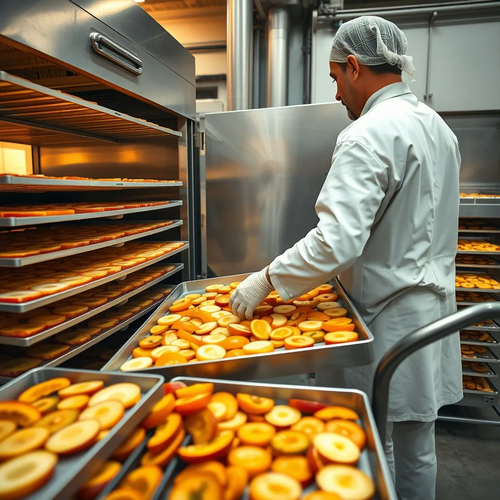
Why Source Dried Fruits from Iran?
Iran is one of a small handful of countries that can supply raisins, dried apricots, dried figs and dates from a single origin, in export volume, in the same season. Combined Iranian exports of dried fruits and nuts run to several hundred thousand tonnes a year, worth on the order of a billion US dollars, and the industry behind that number is not improvised: it has dedicated sorting halls, optical sorters, fumigation and cold-storage capacity, and processors who have been shipping to European, Indian, Turkish and East Asian buyers for decades.
The commercial appeal for a foreign buyer is straightforward. Iranian raisins are among the cheapest reliable sultanas and golden raisins in the world. Iranian dried apricots from the north-west compete directly with Turkish Malatya fruit at a discount. Estahban figs are a genuinely distinctive product with no close substitute. And Iranian dates – Mazafati, Piarom, Zahedi, Sayer – cover the full range from soft fresh-eating fruit to industrial paste stock.
The risk is equally straightforward, and it is almost entirely about residues, contaminants and lot consistency, not about whether the fruit exists. Dried fruit is the single product category where a technically compliant supplier and a non-compliant one look identical in a photograph. Excess SO2 on golden raisins and apricots, aflatoxin in figs, high moisture that ferments in a hot container, sand and stem content above the grade you paid for – each of these is invisible at the offer stage and expensive at the destination port.
If you buy Iranian dried fruit on a price list and a WhatsApp photo, you will eventually get a rejected consignment. If you buy on a written specification, a third-party laboratory certificate against your destination market’s limits, an approved control sample, and pre-shipment inspection, Iranian dried fruit is one of the strongest value propositions in the global market. IranLocalize exists to close exactly that gap: we verify the processor, lock the specification to your market’s regulations, arrange independent testing, and inspect the goods before they load.
Product Overview & Use Cases
Iranian dried fruit moves in four broad commercial families, and each has a different risk profile and a different buyer.
Raisins are the volume product. They go to bakery and cereal manufacturers, snack packers, confectionery, and retail re-packers. Buying decisions turn on colour consistency, SO2 level, moisture, and mechanical damage.
Dried apricots split sharply between the bright orange sulphured product (retail snacking, bakery decoration) and the dark brown unsulphured or organic product (health-food channels, baby food, clean-label brands). These are effectively two different products with two different price points and two different compliance conversations.
Dried figs from Estahban in Fars province are Iran’s flagship: sun-dried, naturally split, cream to light-brown, sold on size and colour grade. They serve retail snacking, bakery, and the premium gift market. Aflatoxin is the defining compliance issue.
Dates cover a very wide spread, and are covered in depth in our dedicated guide to Iranian dates. Mazafati is a soft, high-moisture fresh date sold chilled for retail. Piarom is a semi-dry, dark, premium date. Zahedi is dry, hard and cheap – the workhorse for industrial date paste, syrup and animal feed. Sayer/Stamaran sits in between and is the classic bulk export date.
Beyond these four, Iranian processors also supply dried apples, dried plums and prunes, dried peaches, dried persimmon, dried lemon (limoo amani), sour cherries, barberries (zereshk), and dried mulberries – typically in smaller lots and often as part of a mixed container alongside a raisin or fig base load. Dried apple in particular is worth a look: the intensely aromatic Golab variety travels far better dried than it does fresh.
Variants, Grades and What They Actually Mean
Raisins
- Sultana (sun-dried, light to mid brown) – seedless Thompson-type grapes, sun-dried on the ground or on racks. The cheapest and highest-volume Iranian raisin. Expect some stem and cap content; grade is defined by how much.
- Golden raisin (bright amber) – the same grape dried in controlled tunnels or chambers under sulphur dioxide treatment, which prevents browning. The SO2 level is the entire commercial and regulatory story of this product.
- Green raisin / Kashmari (long, pale green) – shade-dried over weeks, from long Pekami-type grapes. Distinctive sweet-sour character, notably more expensive, and largely a premium retail and gift product rather than an industrial input.
- Malayer raisin – from the Malayer region of Hamadan, amber to greenish, widely regarded as the benchmark quality tier for Iranian golden and sultana production.
- Black/sun-dried raisin – unsulphured, dark, lower price, used where colour does not matter.
Typical export grades are expressed as a combination of moisture (commonly 13-18% depending on type), damaged-berry percentage, stem/cap count per kilogram, and foreign matter. Insist on numbers, not adjectives. “Grade A” means nothing across two different processors.
Dried Apricots
- Sulphured (bright orange) – whole pitted or halved, treated with SO2 to hold colour.
- Unsulphured / natural (dark brown) – no SO2, darker, sweeter, shorter shelf presentation window.
- Organic – unsulphured by definition, with certification requirements that must be verified at the processor, not just claimed.
- Qamar-al-Din sheets – apricot puree dried into sheets, a regional specialty with strong Levant and Gulf demand.
Sizing is normally by count per kilogram or per 500 g. Softness and pliability at destination is a function of both moisture and SO2 – a sample that arrives leathery usually means the fruit was over-dried to cut weight-loss risk.
Dried Figs
Estahban figs are graded principally on size (diameter) and colour, with the highest grades being large, light cream, fully split and free of insect damage. Lower grades run smaller, darker, and are sold into paste and bakery applications. Because figs dry on the tree and drop to the ground, aflatoxin and insect infestation are structurally higher-risk here than in any other Iranian dried fruit – which is why credible processors run UV sorting lines specifically to pull fluorescing fruit.
Dates
- Mazafati (Bam) – soft, dark, 15-18% moisture, requires chilled transport and storage. Retail fresh-date product.
- Piarom (Maryami) – semi-dry, elongated, dark brown, low moisture, premium price, excellent shelf stability.
- Zahedi – dry, hard, pale, very low cost. Paste, syrup, alcohol, feed.
- Sayer / Stamaran – semi-dry, the classic bulk export grade, often supplied pitted for industrial use.
Quality, Compliance & Testing
This is the section that determines whether your container clears customs. Set these limits in the contract, against your own destination market, before you place the order.
- Aflatoxins. The EU maximum for dried figs is generally 4 µg/kg total aflatoxins with 2 µg/kg for B1 (dried figs sit in a stricter category and are subject to increased border controls for several origins). Other markets differ: verify the exact figure for your destination and cite it in the contract. Require a certificate from an accredited third-party laboratory on the actual shipped lot – not a generic annual certificate.
- Sulphur dioxide (SO2). The EU permits SO2 in dried fruit up to product-specific maxima – commonly around 2000 mg/kg for dried apricots and figs and 1500 mg/kg for raisins under the food-additives framework, with lower levels increasingly demanded by retailers and by organic and clean-label programmes. Any product containing more than 10 mg/kg must be declared as an allergen on the label. Specify your target level, not just “compliant”.
- Pesticide residues (MRLs). The most common single cause of EU RASFF notifications on this category. Require a multi-residue screen against the destination market’s MRL list.
- Moisture and water activity. Moisture drives both mould risk and weight. Set a maximum and verify it – over-moist fruit ferments in a hot container, over-dry fruit means you paid for sugar you did not get.
- Microbiology. Yeasts, moulds, Salmonella, total plate count – standard for any fruit going into a food-manufacturing plant.
- Foreign matter, insect damage, stems and sand. Specify a maximum percentage and an AQL for visual defects.
- Heavy metals where the destination requires it.
- Documents and systems. Certificate of Origin, Phytosanitary Certificate, Health Certificate, and where relevant Halal and organic certification. On the processor side, look for ISO 22000, HACCP, and BRCGS or IFS if you are supplying European retail.
A practical rule: the laboratory must be independent of the supplier and instructed by you or by us, not by the seller. A seller-commissioned certificate is a starting point for discussion, not evidence.
Packaging & Marking
- Raisins: 10 kg or 12.5 kg cartons with food-grade liner, or 20 kg bulk cartons for industrial buyers. Vacuum or modified-atmosphere packing where oxidation or moisture migration is a concern.
- Dried apricots: 5 kg, 10 kg or 12.5 kg cartons, often in perforated trays or interleaved layers to prevent block-setting.
- Dried figs: graded fruit in 5 kg or 10 kg cartons, frequently in retail-ready trays for the top grades.
- Dates: Mazafati in 500 g-1 kg retail packs or 5 kg bulk, chilled. Zahedi and Sayer in 10-20 kg cartons or industrial bulk bags.
- Private label / retail packs: Iranian processors are generally flexible on OEM printing and pack format, with artwork and plate lead time added on top of production.
Mark cartons with product, variety, grade, net and gross weight, lot number, production and best-before dates, origin, processor code, and the importer’s own reference. Lot-level traceability is the thing that makes a recall survivable – insist on it.
Container loading matters more here than in most categories: dried fruit in a hot container sweats. Use ventilated or reefer equipment for high-moisture product, request desiccant and liner protection on long routes, and do not accept a floor-loaded container for soft dates.
MOQ, Lead Time & Incoterms
MOQ in practice is driven by container economics rather than by processor minimums. A 20’ container of raisins is roughly 18-20 tonnes; most exporters will quote from one full container, and many will do a mixed container (raisins plus figs plus apricots, for example) at a modest premium. Sub-container LCL quantities are possible for trial orders but carry a meaningful per-kilo penalty.
Lead time is dominated by the harvest calendar, not by the factory. Grapes and figs are harvested and dried from late summer into autumn; dates run late summer through autumn; apricots are a summer crop. Fruit bought in-season out of fresh crop is cheaper, better, and faster. Fruit bought in late spring from the tail of last year’s crop is older, more variable, and slower to assemble. Once a lot is agreed, expect roughly 2-4 weeks from contract to loading for a standard bulk order, plus 1-3 weeks for private-label artwork and packaging.
Incoterms: FOB Bandar Abbas is the normal quoting basis for sea freight. CFR/CIF to a named destination port is widely available. EXW is common for smaller lots moving overland to Turkey, Iraq or Central Asia. Whichever you use, fix in the contract who commissions and pays for the inspection and the laboratory testing, and at what point title and risk transfer – these two clauses decide who eats a failed lot.
Price & Total Cost of Ownership
Published price lists in this category are close to useless: the spread between the cheapest and the most expensive Iranian raisin offer in the same week can exceed 40%, and almost all of that spread is real quality difference rather than negotiating margin. What actually drives the number:
- Crop year and harvest size. A short crop moves the whole market, and a drought year in the grape regions moves it hard.
- Variety and grade. Green Kashmari raisin and Piarom date are multiples of sultana and Zahedi respectively.
- Processing level. Unwashed field-run, washed and sorted, optically sorted, hand-picked – each step adds cost and removes risk.
- Compliance level. Low-SO2, organic, BRCGS-certified plant, third-party tested – all of these cost more per kilo and all of them cost less per container once rejection risk is priced in.
- Currency and payment terms. Exchange-rate movement and the payment channel available to you can move the effective price several percent.
- Packaging and freight. Chilled date shipments and retail-ready packing change the landed cost materially.
The honest TCO framing: a lot that is 8% cheaper per kilo and fails an aflatoxin or MRL test at the destination port costs you the goods, the freight, the destruction or re-export cost, and the customer. Buy the certificate, not the discount.
How IranLocalize Reduces Your Risk
- Processor verification on the ground. We visit the plant, confirm it exists at the stated capacity, check its certifications are live rather than expired, and confirm it actually processes rather than re-sells.
- Specification drafting. We turn your requirement into a written spec with numeric limits tied to your destination market’s regulations – moisture, SO2, aflatoxin, MRLs, defect AQL, packaging and marking.
- Sampling from current production. Control samples pulled from the lot that will actually ship, not from a display shelf.
- Independent laboratory testing. Accredited lab, instructed by us, on the shipped lot, against your limits.
- Contracting. Iranian-law-workable contracts with clear quality clauses, penalties, and rejection rights.
- Pre-shipment inspection. Carton-level checks with photographic and video evidence, weight verification, and loading supervision.
- Logistics and documentation. Coordination of freight, phytosanitary and health certification, and destination-specific paperwork.
RFQ Checklist – Send This to Get a Precise Quote
- Product and variety (e.g. golden sultana raisin, Malayer, current crop).
- Quantity and whether you want a single-product or mixed container.
- Destination country and port – this determines the compliance limits.
- Maximum SO2 you will accept, or “unsulphured/organic”.
- Maximum moisture and any water-activity requirement.
- Aflatoxin and MRL limits you must meet.
- Grade definition: size/count, colour, maximum defect and foreign-matter percentage.
- Packaging: carton size, liner, retail vs bulk, private label yes/no.
- Certification required: ISO 22000, HACCP, BRCGS/IFS, Halal, organic.
- Incoterm and target shipment window.
- Payment terms and the banking route available to you.
- Shelf-life requirement at destination.
Buyer Mistakes and How to Avoid Them
- Buying on a photograph. Photographs cannot show moisture, SO2 or aflatoxin. Fix: approved control sample plus lab certificate on the shipped lot.
- Accepting a seller-commissioned certificate. Fix: independent accredited lab, instructed by the buyer’s side.
- Ignoring the harvest calendar. Buying “fresh crop” in June gets you last year’s fruit. Fix: contract the variety and crop year explicitly.
- Specifying “compliant” instead of a number. Compliant with which market? Fix: name the regulation and the figure.
- Underestimating SO2 as a commercial issue. Retailers and clean-label brands increasingly demand levels well below the legal maximum. Fix: set your own target early – it changes which processors can even bid.
- Treating dates as one product. Quoting “Iranian dates” gets you Zahedi when you wanted Mazafati, or a chilled-chain requirement you did not plan for. Fix: name the variety and the moisture band.
- No pre-shipment inspection. Fix: PSI is the cheapest insurance in this category, by a wide margin.
- Skipping the packaging conversation. Block-set apricots and fermented dates are usually packaging and transport failures, not fruit failures. Fix: specify liner, interleaving, and equipment type.
FAQs
What is Iran’s strongest dried-fruit product for an importer? Raisins on volume and price, Estahban figs on distinctiveness, Mazafati and Piarom dates on premium retail, dried apricots as a direct lower-cost alternative to Turkish origin.
Is SO2 a problem for the EU market? Not in itself – SO2 is permitted within product-specific maxima and must be declared on the label above 10 mg/kg. The problem is exceeding your destination’s limit, or exceeding what your retail customer’s own specification allows, which is often stricter than the law.
How serious is aflatoxin risk in Iranian figs? It is the defining risk of the product, for structural reasons rather than negligence – figs dry outdoors. Serious processors run UV sorting specifically to remove affected fruit. Buy from those processors, test the shipped lot, and it is a managed risk.
Can I get organic certification? Yes, for apricots, raisins and some dates, but the certification must be verified at the processor and the chain of custody documented. Treat an unverifiable organic claim as a red flag about everything else the supplier says.
What is a realistic minimum order? One 20’ container is the efficient unit. Trial orders below that are possible at a per-kilo premium and are often worth paying for on a first engagement.
How are payments handled given banking restrictions? This varies by your jurisdiction and bank and needs to be resolved before the contract is signed, not after. We will tell you plainly what routes are and are not workable for your situation rather than promising a channel that does not exist.
Can one container hold several products? Yes, and for a first order it is often the smartest structure – it lets you evaluate a processor across several lines at once.
Collaboration Workflow with IranLocalize
- Send your RFQ using the checklist above, with the destination country named.
- We shortlist two or three verified processors and return technical and commercial proposals.
- Sample approval from current production, with an agreed control sample retained on both sides.
- Laboratory testing at an accredited independent lab against your destination limits.
- Contract with hard numeric specs, Incoterms, inspection rights, penalties and milestones.
- Production and pre-shipment inspection with photographic and video evidence.
- Shipping and documentation aligned to your destination’s import requirements.
- Post-shipment review – we feed destination QC results back into the next order’s spec.
Executive Summary
- Why Iran: four major dried-fruit families from one origin, at real export volume, at prices below the comparable Mediterranean and Turkish product.
- What actually matters: SO2, aflatoxin, MRLs and moisture – specified as numbers, tied to your destination market, and verified by an independent lab on the shipped lot.
- Where buyers lose money: the photograph, the seller’s own certificate, and the skipped inspection. Never the fruit itself.
- Why IranLocalize: we verify the processor, write the specification, commission the testing, inspect the loading, and stay accountable for the outcome.
If you are also evaluating other Iranian food-sector origins, see our guides to bulk Iranian pistachios and Iranian saffron sourcing – these frequently travel in the same container and are bought by the same buyers.
Ready to evaluate dried-fruit processors in Iran? Send us your RFQ with your destination market and your compliance limits. We will come back with verified options, current-crop samples, and a firm timeline.