

Key Products
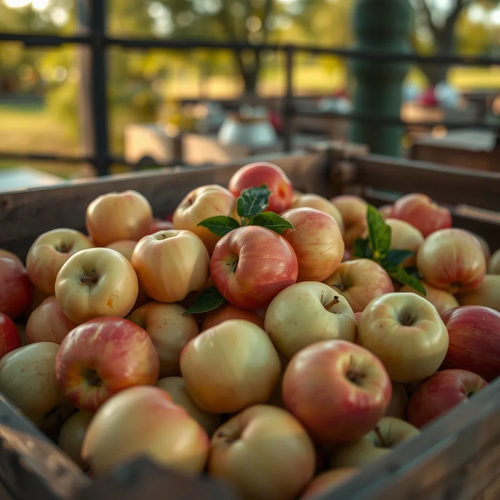
Iranian Apples for Export: Golab, Red Delicious, Gala and Golden from Iran
Why Source Apples from Iran?
Iran produces in the region of four million tonnes of apples a year, which places it among the world’s largest producers. The orchards sit at altitude – Semirom in Isfahan province, Urmia, Maragheh, Miyaneh, Oshnavieh and Damavand – where cool nights, intense sun and a wide diurnal range do what they do everywhere in the apple world: build colour, firmness and sugar.
The export trade is established rather than aspirational. Iranian apples move in volume to Russia, India, Iraq, the Gulf, Central Asia and Turkey, with Red Delicious alone accounting for roughly a third of national production.
The risk in this category is not supply, and it is not flavour. It is postharvest. An apple is a living thing that keeps respiring after it leaves the tree, and almost everything that goes wrong in an apple container was decided before the fruit was ever loaded – at picking, in the cooling room, and in the storage regime. The three failures that actually cost buyers money are fruit picked at the wrong maturity, storage disorders that appear only after arrival, and residues that the destination does not permit. None of them is visible when the container is sealed.
If you are building a wider Iranian fresh produce programme, see also our guides to onions and bell peppers.
Golab – the Variety With No Substitute
Start here, because it is the one Iranian apple a buyer cannot source anywhere else.
Golab is an intensely aromatic Iranian apple named for its perfume, which genuinely recalls rose water (golab). It is small, often small enough to eat in a bite or two, with a pale yellow-green ground colour and a rosy blush, a crisp-then-tender texture, and a floral aroma that is unlike any Western commercial variety. It is one of Iran’s oldest cultivated apples and carries real cultural weight domestically.
Two things a buyer must understand before getting excited about it:
1. It is very early. Golab harvests from roughly mid-July, weeks before the main commercial crop. That is a genuine commercial opportunity – it arrives in a gap when northern-hemisphere storage fruit is finished and the new crop has not started.
2. It does not store, and it does not travel well. This is the honest limitation and we will not soften it. Golab is soft-fleshed, ripens fast, and has a short shelf life measured in days to a couple of weeks, not months. It is not a controlled-atmosphere variety. It is not a long-haul sea freight variety.
What that means practically: Golab is a product for short, fast routes – overland to Iraq, Turkey, the Caucasus and Central Asia, or air freight to Gulf premium retail. Anyone proposing to ship Golab to Northern Europe or South-East Asia by sea is either inexperienced or not telling you something. For those markets, the realistic Golab products are dried apple rings, juice or puree, not fresh fruit.
Sold correctly, into the right market, at the right speed, it is a genuinely differentiated product with no competing origin. Sold as a normal export apple, it is a claim.
The Commercial Export Varieties
- Red Delicious – the volume export variety, roughly a third of Iranian production. Deep red, classic elongated shape, sweet and mild. Stores well. The variety Russia and the regional markets buy in quantity. Its characteristic postharvest risk is superficial scald – see the compliance section, because this is where EU-bound shipments fail.
- Golden Delicious – yellow, sweet, good aromatic character at altitude. Prone to russeting and to shrivel if humidity is not managed in store.
- Gala / Royal Gala – earlier than Red, striped red over yellow, crisp, strong retail acceptance. Generally better eating quality than Red Delicious, and increasingly the variety that discerning buyers ask for.
- Fuji – late, very firm, high sugar, excellent storage life. A strong choice for long-haul and for late-season supply.
- Granny Smith – green, acidic, firm, good storage. Serves both fresh and processing demand.
- Other local varieties beyond Golab exist and are largely domestic; treat any offer of an unfamiliar local cultivar for export with the same scepticism you would apply anywhere.
Processing outlets matter too: Iran produces apple juice concentrate, dried apple rings and apple puree in volume, and for a distant buyer these frequently make more commercial sense than fresh fruit – they ship at ambient and carry none of the cold-chain risk. See our dried fruits guide.
Maturity at Picking – the Decision That Determines Everything
This is the single most important quality conversation you will have with an Iranian packhouse, and most buyers never have it.
An apple picked too early never develops flavour and is prone to scald and shrivel. An apple picked too late softens fast, goes mealy, and will not survive storage or transit no matter how good the cold chain is. The picking window for storage fruit is narrow – often a matter of days – and once it is missed, nothing downstream recovers it.
Require the packhouse to record and report, per lot:
- Starch-iodine index – the standard maturity test, scoring how much starch has converted to sugar. Ask for the scale used and the target range, because scales differ.
- Flesh firmness in kg/cm² or Newtons, by penetrometer.
- Soluble solids (Brix).
- Titratable acidity, which drives perceived flavour balance and holds up eating quality in store.
- Background (ground) colour and red colour coverage percentage.
A packhouse that can produce these numbers for the lot you are buying is a serious operation. A packhouse that cannot is selling you fruit it did not measure, and the price should reflect that.
Storage: Normal Atmosphere vs Controlled Atmosphere
- Normal atmosphere (NA) cold storage at around 0-1°C holds most varieties for a few months.
- Controlled atmosphere (CA) storage – reduced oxygen, elevated carbon dioxide, tightly controlled temperature and humidity – slows respiration dramatically and holds firm varieties for many months, which is what makes year-round apple supply possible anywhere in the world.
Ask directly whether the fruit you are buying came out of CA or NA, and when it went in. An apple that has spent eight months in NA storage is a different product from one that spent eight months in CA, and it will behave completely differently on your shelf. This question is more informative than almost anything else you can ask about an apple offer.
For long sea transit, specify CA containers or at minimum reefer with a controlled and logged set point, and agree the atmosphere and temperature regime in the contract.
Quality, Compliance & Testing
- Pesticide residues (MRLs). Standard requirement: multi-residue screen against the destination’s MRL list, on the shipped lot, by an accredited lab instructed by your side.
- Diphenylamine (DPA) – read this carefully. DPA is the traditional postharvest treatment against superficial scald on Red Delicious and Granny Smith. Its approval was withdrawn in the EU and residue limits are set at the limit of determination, which means EU-bound fruit treated with DPA will fail. Several origins have had consignments rejected on exactly this. Confirm the current status for your destination, and ask explicitly whether the lot was DPA-treated – do not assume it was not. Where scald control is needed for an EU-bound lot, 1-MCP treatment and CA storage are the accepted routes.
- Superficial scald itself – a browning of the skin that develops after removal from storage, so it can appear at the destination on fruit that looked perfect at loading. Require a storage regime and treatment declaration, and consider a shelf-life challenge on a retained sample.
- Bitter pit – sunken brown spots caused by calcium imbalance in the orchard, and again often appearing only after storage. An orchard-management problem, not a packhouse one, which is why the source orchard matters.
- Other storage disorders – internal browning, core flush, soft scald, water core. Ask which the packhouse monitors and how.
- Grading standard. Specify against a recognised standard – the UNECE / EU marketing standard for apples with its Extra, Class I and Class II categories – plus minimum diameter or count, minimum red colour percentage, and tolerances for defects.
- Microbiology and heavy metals where the destination requires.
- Documents: Certificate of Origin, Phytosanitary Certificate, and Health Certificate where required.
- Packhouse systems: ISO 22000 and HACCP at minimum; GLOBALG.A.P. at orchard level and BRCGS or IFS at packhouse level if you supply European retail. GLOBALG.A.P. in particular is a hard gate for many buyers and cannot be arranged retrospectively.
Cold Chain
Apples are forgiving compared with soft fruit, but not forgiving of neglect:
- Rapid pre-cooling after harvest is the step most often skipped and the one that costs the most shelf life. Field heat left in the fruit consumes storage potential that no amount of later refrigeration returns.
- Transit at the agreed set point, typically around 0-1°C for most varieties, with high relative humidity to prevent shrivel.
- Data loggers in the container, with the record as a shipping document and a contractual right to reject on it.
- The weak points are the handovers – packhouse loading bay, port dwell, destination unload. Write responsibility for each into the contract.
Golab is the exception to all of this: no storage regime rescues a variety that does not store. Move it fast or process it.
Packaging & Marking
- Telescopic cartons of 18-20 kg, the standard bulk export format, with tray or alveolar liners for the higher grades.
- Tray-packed cartons by count for retail programmes; poly-liner or modified-atmosphere liner where shrivel or extended transit is a concern.
- Retail punnets and bags for programme business, with the labelling the destination requires.
- Plastic bins for processing fruit going to juice or drying.
- Pallets to the destination’s standard, corner-protected and strapped; do not accept floor-loaded cartons.
Mark with variety, grade and class, size or count, net weight, lot number, harvest and pack dates, storage regime where relevant, origin, orchard and packhouse codes, required transit temperature, and the importer’s reference.
MOQ, Lead Time & Incoterms
MOQ follows container economics: a 40’ reefer of cartoned apples runs roughly 20-24 tonnes. Most exporters quote from one full container. Mixed-variety containers are usually available and are a sensible first-order structure.
Lead time is governed by the harvest and storage calendar:
- Golab: from roughly mid-July, and only briefly.
- Gala: late August into September.
- Red and Golden Delicious: September into October.
- Fuji: October.
- Storage supply: from CA stores through winter and spring, with quality and firmness declining as the season runs on.
Fresh-crop fruit bought in season is better and cheaper. Late-season storage fruit is a different product and should be priced and specified as one. Once a lot is agreed, expect roughly 1-3 weeks to loading.
Incoterms: FOB Bandar Abbas for sea freight; EXW is common and often the right answer for overland movement to Iraq, Turkey, Armenia, Azerbaijan, Afghanistan and Central Asia – which is where the freshest and least risky Iranian apple business is done. CFR/CIF is available. Fix in the contract who owns the reefer set point, who commissions the testing and inspection, and where risk transfers.
Price & Total Cost of Ownership
- Variety and grade drive the headline: Gala and Fuji carry a premium over Red Delicious; Extra class carries a premium over Class I.
- Crop year and harvest size move the whole market, as does spring frost in the producing regions.
- Storage regime and time in store. CA fruit in April costs more than NA fruit in April, and is worth more.
- Colour percentage and size – higher red coverage and larger counts carry real premiums in most retail markets.
- Packaging format – tray-packed retail-ready versus bulk carton is a substantial difference.
- Reefer freight is a first-order cost, not a rounding error.
The TCO framing: an apple container that arrives with scald, shrivel, softening or a failed residue test is rarely partially salvageable. It is a claim, a destruction or a distress sale, plus the freight you already paid. The cheap insurance is the maturity data, the storage declaration, the residue screen and the temperature log.
How IranLocalize Reduces Your Risk
- Packhouse and orchard verification. We visit, confirm the packing and cooling capacity is real, and establish whether CA storage exists on site or the fruit is bought in from elsewhere.
- Maturity data. We require and check starch index, firmness, Brix and acidity per lot – and we tell you when a packhouse cannot produce them.
- Storage and treatment declaration, including an explicit DPA question in writing.
- Specification drafting – variety, class, size or count, colour percentage, firmness at dispatch, defect tolerances, storage regime, transit temperature.
- Independent laboratory testing on the shipped lot, against your destination’s MRLs.
- Cold-chain design and enforcement – pre-cooling verification, set point, loggers, handover responsibilities, and a right to reject on the log.
- Shelf-life challenge on retained samples where the route is long or the fruit is late-season.
- Pre-shipment inspection – grading and count verification, firmness testing at loading, carton and pallet condition, temperature at loading, photographic and video evidence.
- Straight answers on Golab. If your market and route cannot take it fresh, we will tell you and price the dried or juice product instead.
RFQ Checklist – Send This to Get a Precise Quote
- Variety – name it, and if Golab, state your route and transit time.
- Quantity and whether you want a mixed-variety container.
- Destination country and port or border crossing – determines MRLs and certification.
- Class (Extra, I, II) and the standard you grade against.
- Size or count per carton, and minimum red colour percentage.
- Minimum firmness at dispatch and target Brix.
- Storage regime – fresh crop, NA or CA, and how long in store.
- Whether DPA treatment is acceptable in your market – state it explicitly.
- Packaging – bulk carton, tray pack, retail punnet, private label.
- Transit temperature and whether you require CA containers and data loggers.
- Certification required – GLOBALG.A.P., BRCGS/IFS, ISO 22000, HACCP.
- Shelf-life requirement at destination.
- Incoterm, target shipment window, and payment route available to you.
Buyer Mistakes and How to Avoid Them
- Buying Golab for a long sea route. It will not arrive in condition. Fix: short overland routes, air freight, or buy it dried or as juice.
- Never asking about maturity at picking. Fix: require starch index, firmness, Brix and acidity per lot.
- Not asking whether fruit came from CA or NA storage, and when. Fix: ask; it is the most informative question available.
- Assuming no DPA. Fix: ask explicitly and in writing; EU-bound DPA-treated fruit fails.
- Judging the container at loading only. Scald and internal disorders appear later. Fix: retained samples and a shelf-life challenge.
- Skipping pre-cooling. Fix: verify it happened; field heat is storage life you never get back.
- Specifying “Class I” without a standard. Fix: name the UNECE/EU standard and the tolerances.
- Treating late-season storage fruit as fresh crop. Fix: price and specify it as the different product it is.
- Arranging GLOBALG.A.P. after the fact. It cannot be done retrospectively. Fix: confirm certification before the season.
FAQs
What is Golab apple and should I import it? An intensely aromatic early Iranian apple, harvested from about mid-July, with a rose-water-like perfume and no close substitute from any other origin. Import it fresh only for short, fast routes – overland regional markets or air freight to premium Gulf retail. For distant markets, buy it dried or as juice.
Which Iranian apple is the safest first purchase? Red Delicious for volume and familiarity, or Gala for eating quality. Both store and travel well and are the backbone of the export trade.
How long will Iranian apples keep? It depends entirely on variety, maturity at picking and storage regime. Firm varieties out of CA storage keep for many months; Golab keeps for days to a couple of weeks. Any single answer that ignores those variables is wrong.
Why does DPA matter so much? It is the traditional anti-scald postharvest treatment, but its approval was withdrawn in the EU and limits are effectively at the detection threshold. Treated fruit fails EU testing. Ask explicitly, and use 1-MCP and CA storage where scald control is needed for that market.
Can I get GLOBALG.A.P. certified fruit from Iran? Some orchards are certified and others are not, and it cannot be arranged retrospectively for a crop already harvested. Confirm certification before the season, not at the order.
What is a realistic minimum order? One 40’ reefer container. A mixed-variety load is a sensible way to evaluate a packhouse across its range on a first engagement.
How are payments handled given banking restrictions? This depends on your jurisdiction and bank and needs resolving before the contract. We will tell you plainly what routes are and are not workable rather than promise a channel that does not exist.
Collaboration Workflow with IranLocalize
- Send your RFQ using the checklist above, with the destination and route named.
- We shortlist verified packhouses and return technical and commercial proposals, stating storage capability and certification honestly.
- Sample approval and maturity data from the actual lot, with retained control samples.
- Laboratory testing at an accredited independent lab against your destination’s MRLs, including an explicit DPA check where relevant.
- Contract with hard specs, storage and treatment declarations, temperature regime, inspection rights and penalties.
- Pre-shipment inspection – grading, count, firmness, temperature at loading, with photographic evidence.
- Shipping and documentation, with set point and data loggers specified.
- Post-arrival review – destination QC and shelf-life results feed back into the next order’s specification.
Executive Summary
- Why Iran: around four million tonnes a year from high-altitude orchards, an established export trade, a full commercial varietal range – and in Golab, an aromatic early apple no other origin can supply.
- What actually matters: maturity at picking, storage regime (CA or NA, and for how long), scald and DPA status, MRLs, and an enforced cold chain.
- Where buyers lose money: shipping Golab too far, never asking what the fruit’s maturity and storage history were, and assuming no DPA on EU-bound Red Delicious.
- Why IranLocalize: we verify the packhouse and its actual storage capability, require maturity data per lot, ask the DPA question in writing, enforce the cold chain, and tell you honestly when a variety will not survive your route.
Ready to evaluate apple packhouses in Iran? Send us your variety, destination, route and transit time. We will come back with verified options, maturity and storage data, and a firm timeline – and an honest answer on whether Golab fits your market.