

Key Products
Ammonium Sulphate from Iran: 21% N, 24% S Nitrogen and Sulphur Fertiliser
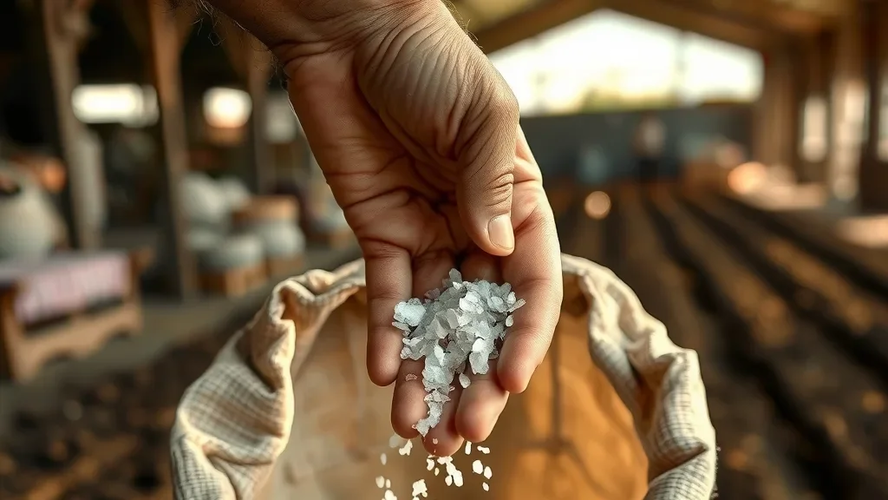
Why Source Ammonium Sulphate from Iran?
Ammonium sulphate is made from ammonia and sulphuric acid – and Iran has an unusual amount of both. The country operates a substantial ammonia and nitrogen petrochemical sector, and it produces sulphuric acid from the elemental sulphur recovered as a byproduct of sweetening sour gas and refining sour crude. As with sulphur bentonite and potassium sulphate, both feedstocks are domestic, which is the structural reason the origin is competitive rather than opportunistic.
Add short overland freight to Iraq, Turkey, Afghanistan, Central Asia and the Caucasus – regions with large irrigated agriculture on alkaline, calcareous, frequently sulphur-deficient soils, which is precisely the soil type ammonium sulphate suits best – and the commercial logic is straightforward.
The risk here is not the assay. 21% nitrogen is easy to verify and hard to fake. The risk is the production route, which determines colour, odour, organic contamination and heavy metals, and which almost no buyer writes into the contract.
What It Is and When It Is the Right Product
Ammonium sulphate supplies 21% nitrogen in ammoniacal form and 24% sulphur as immediately available sulphate. Two nutrients, both plant-available on dissolution – unlike elemental sulphur, which needs weeks of biological oxidation first.
It is the right product in four situations, and the wrong one outside them:
1. When you need sulphur as well as nitrogen. This is the main case. Sulphur deficiency has become widespread as atmospheric sulphur deposition has fallen, and AS solves nitrogen and sulphur in one application.
2. On alkaline and calcareous soils. Ammonium sulphate is strongly acidifying – more so per unit of nitrogen than urea or ammonium nitrate. On the high-pH calcareous soils common across Iran, the Gulf, Central Asia and North Africa, that acidification is a genuine agronomic benefit: it improves availability of phosphorus, iron, zinc and manganese in the root zone.
Say this plainly to your customers, and say the converse too: on soils that are already acidic, ammonium sulphate makes the problem worse and needs liming to offset. A distributor who sells it indiscriminately will eventually damage a customer’s soil and their own reputation.
3. Where ammoniacal nitrogen is preferred – rice paddy, and situations where nitrate leaching or denitrification is a concern.
4. Where volatilisation from urea is a problem – surface-applied urea on warm, high-pH soils loses nitrogen as ammonia gas. Ammonium sulphate does not suffer this to the same degree.
When it is the wrong product: if all you need is nitrogen, urea at 46% N is far cheaper to freight per unit of nutrient. Ammonium sulphate at 21% N means you are shipping more than twice the tonnage for the same nitrogen. The sulphur, the acidification, or the ammoniacal form has to be worth that freight – and for a distant buyer, often it is not. Run that calculation honestly before committing to a container.
Production Route – the Specification Nobody Writes Down
Three routes produce commercial ammonium sulphate, and they do not produce the same product:
Caprolactam byproduct (“capro grade”). A byproduct of nylon intermediate manufacture. Typically the whitest and most consistent material, with high purity, low impurities and good crystal habit. Generally the premium grade, and the one most often specified for EU-destined and quality-sensitive supply.
Synthetic (direct neutralisation). Ammonia reacted directly with sulphuric acid. Clean, controllable, and the route that Iran’s feedstock position most naturally supports. Quality depends on the purity of both inputs.
Coke oven byproduct. Recovered from coke oven gas scrubbing. Historically the cheapest, and the route most likely to carry colour (grey, brown or pink tinge), residual organics, odour, and elevated heavy metals or trace contaminants. Perfectly usable in many applications, and genuinely problematic in others – particularly EU-destined product subject to contaminant limits, and anything going into a quality-sensitive or protected cropping channel.
Specify the route in the contract, and require a full contaminant panel. A grey-tinged material at a low price is usually telling you its route without saying so. That may be entirely acceptable for your market – but it should be your decision, not a discovery at the destination.
Specification: What to Put in the Contract
The headline numbers
- Nitrogen (N): 20.5-21% minimum
- Sulphur (S): 23-24%, or SO₃ around 58-60%
The numbers that decide whether it works
- Free acidity. Residual sulphuric acid from the neutralisation step corrodes storage, handling equipment and blending plant, and causes bag degradation. Specify a maximum free acidity as H₂SO₄, and a pH range on solution.
- Moisture. The primary driver of caking. Specify a maximum, typically well below 1%, and verify it at loading rather than at production.
- Colour and appearance. White crystalline or white granular. State it. Colour is the cheapest early indicator of route and contamination.
- Iron content. Relevant for both appearance and for some industrial and fertigation uses.
- Heavy metals – cadmium, lead, arsenic, mercury, chromium VI. Required for EU-destined product under the Fertilising Products Regulation and increasingly demanded elsewhere. Get a panel, not a declaration.
- Organic residues and odour. Particularly relevant on coke-oven material. If the product smells, your customer will notice before you do.
- Water-insoluble matter if the product is going into fertigation or a solution plant.
- Particle size distribution – see below, because the form matters more than buyers expect.
- Anti-caking treatment – whether used, which agent, at what dose, and whether it is acceptable in your market and for any organic claim.
Crystalline or Granular – Choose Before You Quote
Fine and standard crystalline. The cheapest form. Suitable for direct application, dissolution, and as a feedstock into compound fertiliser manufacture where it will be reacted or granulated. Cakes readily and segregates badly in blends.
Coarse crystalline. Better handling, less dust, moderate blending behaviour.
Granular (compacted). Sized and hardened for mechanical spreading and for bulk blending with granular NPK and urea. Costs more, and is the correct product whenever your customer blends.
The blending point is worth repeating because it causes more complaints than any other issue in bagged fertiliser distribution: fine crystalline material segregates from granules during handling, transport and spreading. The blend separates, the field is fertilised unevenly, and it shows up as striping weeks later. Ask your customer what they do with the product before you choose the form.
Caking and Packaging
Ammonium sulphate is hygroscopic. Under pallet weight, in a container that heats and cools across a sea crossing, with moisture present, fine crystalline material sets solid. Caked product cannot be spread, blended or efficiently dissolved – a total commercial loss, not a quality dispute.
Control it contractually on four fronts:
- Moisture at packing, with a maximum verified at loading.
- Bag construction – PP woven with a sealed PE inner liner. An unsealed liner does very little.
- Anti-caking agent – specify whether, which and how much.
- Container preparation – kraft lining, desiccant, and avoidance of long hot port dwell. Also specify a pallet stacking height limit.
Standard packing is 25 kg or 50 kg bags, or 1,000-1,250 kg FIBC jumbo bags with liner. Bulk is available for buyers with covered handling, with correspondingly higher moisture risk.
Mark with product name, N and S percentages, net weight, lot number, production date, origin, producer code, storage instructions and destination regulatory information.
Compliance & Certification
- EU: the Fertilising Products Regulation (EU) 2019/1009 sets contaminant limits for CE-marked fertilising products. Establish whether you are using the CE route or national mutual recognition before ordering.
- REACH registration status where the EU is the destination.
- Destination fertiliser registration – required in most markets before first import, and frequently the longest lead item in the project. Start it first.
- Organic certification – ammonium sulphate is generally not permitted in certified organic production. Do not market it into that channel.
- SDS in GHS format in the destination language. Ammonium sulphate is not normally a dangerous good for transport, which makes it considerably simpler to ship than nitrate-based products – confirm rather than assume.
Sanctions and banking must be resolved for your specific jurisdiction before you commit. We will tell you plainly what routes are workable.
MOQ, Lead Time & Incoterms
MOQ follows container economics: a 20’ container of bagged product runs roughly 25-27 tonnes, and most producers quote from one full container. Granular grade, private-label bagging and non-standard specifications carry higher minimums.
Lead time typically runs 2-5 weeks for standard crystalline from an established producer, longer for granular, private label, or a specific route requirement. Destination registration runs in parallel and is usually the critical path.
Incoterms: FOB Bandar Abbas for sea freight; EXW is common and economically strong for overland shipment to Iraq, Turkey, Afghanistan, Armenia, Azerbaijan and Central Asia – where the low nitrogen concentration matters much less because freight is short. CFR/CIF available. Fix in the contract who commissions and pays for independent analysis and pre-shipment inspection.
Price & Total Cost of Ownership
- Compare on cost per unit of nitrogen delivered, landed – and then credit the sulphur properly. Against urea, ammonium sulphate looks expensive per unit N until the sulphur and the acidification are valued.
- Freight is the decisive variable. At 21% N you ship more than twice the tonnage of urea for the same nitrogen. Origin proximity is therefore worth more in this product than in almost any other fertiliser, which is exactly why Iran suits regional buyers and suits distant ones less well.
- Route and grade drive the rest: capro and clean synthetic material commands a premium over coke-oven product, and granular commands a premium over crystalline.
- Registration and compliance are largely one-off.
The expensive failures are a caked container and a blend that segregated. Both are prevented by specification and packaging decisions that cost very little at the order stage.
How IranLocalize Reduces Your Risk
- Producer verification. We visit the plant, confirm it manufactures rather than re-bags, and establish the production route – because the route determines the quality profile and your marketing claims.
- Specification drafting. N, S, free acidity, moisture, colour, iron, heavy metals, organics, particle size, anti-caking treatment.
- Independent laboratory testing on the shipped lot, including a contaminant panel.
- Form selection. We ask what your customer actually does with the product and specify crystalline or granular accordingly.
- Caking prevention – moisture verified at loading, sealed liner, container preparation, stacking limits.
- Regulatory support on destination registration, EU FPR route and SDS.
- Contracting with hard specs, retained samples, inspection rights and penalties.
- Pre-shipment inspection – bag weight and seal integrity, moisture, sampling for retained analysis, container lining, loading supervision.
RFQ Checklist – Send This to Get a Precise Quote
- Form – fine crystalline, standard crystalline, coarse crystalline, or granular.
- What your customer does with it – direct application, bulk blending, dissolution, or compound manufacture.
- Production route you will accept – capro, synthetic, or coke oven.
- Quantity and packaging: 25 kg, 50 kg, FIBC or bulk.
- Destination country – determines registration and contaminant limits.
- Minimum N and minimum S.
- Maximum free acidity and solution pH range.
- Maximum moisture, and whether you want an anti-caking agent.
- Colour requirement.
- Heavy metal limits for your destination.
- Particle size, and the blend components if it will be blended.
- Private label yes/no.
- Incoterm, destination port or border crossing, and target shipment window.
- Your registration status in the destination market.
Buyer Mistakes and How to Avoid Them
- Specifying only the N figure. Fix: specify route, free acidity, moisture, colour and contaminants.
- Not naming the production route. Fix: name it; coke-oven material is a different product at a different price with a different contaminant profile.
- Buying fine crystalline for a customer who bulk blends. Segregation and striped fields. Fix: buy granular.
- Under-specifying the bag. Fix: sealed PE liner, verified low moisture, desiccated container, stacking limit.
- Ignoring free acidity. It corrodes your customer’s equipment and degrades bags. Fix: specify a maximum.
- Selling it onto acidic soils without warning. Fix: educate the channel – it is an acidifying product, which is a benefit on calcareous soil and a liability on acid soil.
- Comparing price per tonne against urea. Fix: compare cost per unit N landed, then credit the sulphur.
- Starting destination registration after ordering. Fix: start it first.
FAQs
Why buy 21% N when urea is 46%? Because of the sulphur, the acidification on high-pH soils, the ammoniacal nitrogen form, and lower volatilisation losses on warm alkaline soils. If none of those matter to your customer, urea is the better buy and you should say so.
Is it really that acidifying? Yes – per unit of nitrogen it is among the most acidifying common fertilisers. That is a selling point on calcareous soils and a warning on acid soils.
What is capro grade? Ammonium sulphate recovered as a byproduct of caprolactam manufacture – typically the whitest and most consistent material, and usually the premium grade.
Will it cake in transit? It will if moisture, packaging and stowage are not controlled. With a sealed liner, verified low moisture and a prepared container, it arrives free-flowing.
Can I use it in organic farming? Generally no. Ammonium sulphate is not permitted under most organic standards.
Is it a dangerous good? Not normally – a meaningful practical advantage over nitrate-based fertilisers. Confirm classification for your route.
What is a realistic first order? One full container with independent analysis including a contaminant panel, with destination registration already in hand or in progress.
Collaboration Workflow with IranLocalize
- Send your RFQ using the checklist above, with the destination and end use named.
- We shortlist verified producers and return proposals stating the production route clearly.
- Sample approval from current production, with retained samples.
- Independent testing – N, S, free acidity, moisture, colour, iron, heavy metals, organics, particle size.
- Regulatory workstream – destination registration, EU FPR route and SDS, in parallel.
- Contract with hard specs, packaging and moisture terms, inspection rights and penalties.
- Production and pre-shipment inspection with photographic evidence and verified loading condition.
- Shipping and documentation.
- Post-season review feeding back into the next order’s specification.
Executive Summary
- Why Iran: ammonia capacity and sulphuric acid from byproduct sulphur – both feedstocks domestic – plus short freight to regional markets whose alkaline, sulphur-deficient soils are exactly what this product suits.
- What actually matters: the production route, free acidity, moisture and physical form – not the 21% figure, which every producer meets.
- Where buyers lose money: a caked container, fine crystalline sold to a blender, and freight paid on a low-concentration product where urea would have done the job.
- Why IranLocalize: we establish the route, specify beyond the assay, test independently, choose the right physical form for the actual end use, and control the packaging against caking.
Ready to evaluate ammonium sulphate producers in Iran? Send us your form, end use, destination and volume. We will come back with verified options, fully analysed samples, and a realistic timeline.