

Key Products
Potassium Sulphate (SOP) Powder from Iran: Chloride-Free Potash Fertiliser
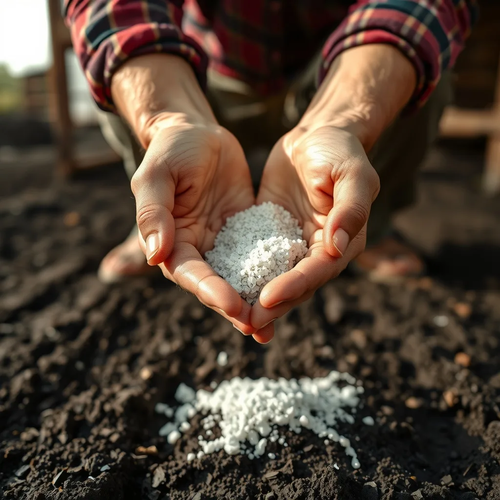
Why Source Potassium Sulphate from Iran?
Potassium sulphate is made, worldwide, in two main ways: from natural sulphate-bearing brines and minerals, or by the Mannheim process – reacting potassium chloride with sulphuric acid in a muffle furnace above 600°C, which accounts for roughly half to sixty percent of global supply.
Iran’s position is structural rather than incidental, and it is worth spelling out because it is the same logic that applies to sulphur bentonite:
Both Mannheim feedstocks are domestic. Iran produces potassium chloride from the Khur Playa potash operations in the central desert, and it has abundant sulphuric acid derived from the elemental sulphur recovered as a byproduct of sweetening sour gas and refining sour crude. Most Mannheim producers worldwide import at least one of these two inputs. Add competitive energy costs for a furnace-intensive process, and short overland freight to Iraq, Turkey, Afghanistan, Central Asia and the Caucasus – all substantial agricultural markets – and the commercial case is real.
The risk in this category is not fraud about the headline number. K2O is easy to assay and hard to fake at scale. The risk is in the three things buyers routinely leave out of the specification: chloride, free acidity, and water-insoluble matter. A product can be a perfectly honest 50% K2O and still corrode your customer’s fertigation system, burn a chloride-sensitive crop, or block every emitter in a drip line.
What SOP Is For – and Why Anyone Pays the Premium Over MOP
Potassium sulphate costs meaningfully more per unit of potassium than muriate of potash (potassium chloride, MOP). If you cannot articulate why a grower should pay that premium, you cannot sell this product. There are three real reasons:
1. Chloride. MOP is roughly 46-47% chloride. A number of commercially important crops are chloride-sensitive, where chloride depresses quality, yield or both: tobacco, potatoes, grapes and other vines, citrus, avocado, berries, tea, coffee, stone fruit, and most greenhouse and protected crops. For these, SOP is not a premium option, it is the correct product.
2. Salt index. SOP has a substantially lower salt index than MOP, which matters on saline or sodic soils, in arid irrigated agriculture, and in any fertigation application where you are already managing electrical conductivity. Large parts of the Middle East, Central Asia and North Africa are exactly this situation.
3. It is a dual nutrient. SOP delivers roughly 50% K2O and 17-18% sulphur in a single, immediately plant-available product. Unlike elemental sulphur, the sulphate in SOP needs no biological oxidation – it is available on dissolution. For a grower who needs both potassium and sulphur, one application does both.
That third point is the one most distributors under-use in their sales argument.
Grades: Which Product Are You Actually Buying?
This is the first thing to settle, because the grades have different specifications, different prices and different customers.
Standard agricultural powder. Fine white crystalline powder, typically 50-52% K2O. Applied directly, incorporated into soil, or used as a feedstock in compound fertiliser manufacture. The cheapest grade, and what “SOP powder” usually means without further qualification.
Soluble / fertigation grade. Same chemistry, much tighter specification: low water-insoluble matter, low chloride, controlled pH, and a clear solution on dissolution. Used in drip irrigation, hydroponics and foliar spraying. This grade lives or dies on insolubles – see below. It carries a real premium and is the grade where quality problems are most expensive.
Granular. Compacted or granulated for mechanical spreading and for bulk blending with granular NPK products. If your customer bulk blends, you need granular, not powder – see the blending warning below.
Technical / industrial grade. For glass, ceramics, dyes and other non-agricultural uses, with its own specification priorities.
Specification: What to Put in the Contract
The number everyone quotes
- K2O: 50% minimum, commonly 50-52%
- Sulphur (S): 17-18%, or SO₃ around 42-45%
The numbers that actually decide whether the product works
Chloride (Cl⁻) – the entire point of the product. Mannheim SOP typically runs below 1-1.5% chloride, and good material comes in well under 1%. For soluble and fertigation grades, and for genuinely chloride-sensitive crops, specify below 1% and verify it. A “chloride-free” claim with no number is not a specification. This is the one test to run on every lot.
Free acidity and pH. The Mannheim route starts with sulphuric acid, and residual free acid can carry through into the product. Consequences: corrosion of fertigation equipment and metal storage, incompatibility in blends, and complaints from growers whose irrigation lines suffer. Specify the pH of a 1% or 5% solution and a maximum free acidity. This is the single most commonly omitted specification on Mannheim SOP, and it is the one that generates the angriest customers.
Water-insoluble matter. Critical for soluble grade and largely irrelevant for direct soil application – so specify it according to the grade. Insolubles are what block drip emitters and spray nozzles. Require a maximum percentage and a dissolution test: dissolve at working concentration and observe clarity and residue.
Moisture. Drives caking. Specify a maximum, commonly well below 1%.
Sodium. Relevant on sodic soils and in high-value protected cropping. Ask for it, especially on mineral-route product.
Particle size distribution and dust. For powder, dust is a handling, health and product-loss issue; for granular, size range and crush strength determine spreadability and blending behaviour.
Heavy metals – cadmium, lead, arsenic, mercury, chromium VI. Required for EU-destined product and increasingly demanded elsewhere. Get a full panel, not a declaration.
Anti-caking treatment – whether one is used, what it is, and whether it is acceptable in your market and for organic certification.
The Caking Problem – Specific to Powder
This is the practical failure that ruins powder SOP shipments, and it deserves its own section because you asked about powder.
Fine crystalline SOP powder, held under the weight of a stacked pallet, in a container that heats and cools across a sea crossing, with even modest moisture present, sets into a solid block. Caked product cannot be spread, cannot be dissolved efficiently, and cannot be blended. It is not a quality dispute about the chemistry – the chemistry is fine – it is a total commercial loss.
Control it on four fronts, all of which belong in the contract:
- Moisture at packing – specify a maximum and verify it at loading, not just at production.
- Bag construction – PP woven with a genuine PE inner liner, heat-sealed. A liner that is present but not sealed does very little.
- Anti-caking agent – specify whether you want one, which one, and at what dose. Confirm acceptability in your destination and for any organic claim.
- Container protection – desiccant, kraft lining, and avoidance of long dwell in a hot port. A reefer is not needed; a dry, well-prepared dry box is.
Also require a stacking height limit on the pallet configuration, and inspect bag condition at loading.
A Blending Warning Worth Knowing
If your customer bulk blends SOP with granular NPK products, powder is the wrong product. Fine powder segregates from granules during handling, transport and spreading – the blend separates, and the field receives an uneven application that shows up as striping. The grower blames the fertiliser, and they are right to.
For bulk blending, buy granular SOP with a particle size distribution matched to the other components of the blend. Powder is correct for direct application, for dissolution, and as a raw material going into a compound fertiliser plant where it will be reacted or granulated – not for mechanical blending.
Ask your customer what they do with it before you choose the grade. This one question prevents a large proportion of complaints in this category.
Compliance & Certification
- EU: the Fertilising Products Regulation (EU) 2019/1009 governs CE-marked fertilising products, with contaminant limits including cadmium. Establish whether you are going the CE route or a national mutual-recognition route before ordering.
- REACH registration status where the EU is the destination.
- Destination fertiliser registration. Most markets require product registration before first import, and the lead time is frequently months. Start it before you order – it is often the longest item in the whole project.
- Organic certification. Potassium sulphate of mineral origin is permitted under most organic standards; Mannheim-route product is treated differently by some certifiers. Verify with your own certifier against the specific production route, and do not assume the two are interchangeable for organic purposes.
- SDS in GHS format, in the destination language. SOP is not normally a dangerous good for transport – a welcome contrast with elemental sulphur products – but confirm rather than assume, particularly where free acidity is significant.
- Halal and kosher certification where your channel requires it.
Sanctions and banking. Fertiliser attracts scrutiny, and the payment route and import path for your specific jurisdiction must be established before you commit. We will tell you plainly what is and is not workable rather than promise a channel that does not exist.
Packaging & Marking
- 25 kg or 50 kg PP woven bags with sealed PE inner liner – the liner is not optional on powder.
- 1,000 kg / 1,250 kg FIBC jumbo bags with liner for bulk agricultural supply; UV-stabilised fabric if it will sit outdoors.
- Bulk for the largest buyers with covered handling, though moisture risk rises sharply.
- Pallets shrink-wrapped, stacking height limited, container lined and desiccated for sea freight.
- Mark with product name, K2O and S percentages, maximum chloride, net weight, lot number, production date, origin, producer code, storage instructions and the regulatory information your destination requires.
MOQ, Lead Time & Incoterms
MOQ is set by container and production-run economics. A 20’ container of bagged product runs roughly 25-27 tonnes; most producers quote from one full container. Soluble grade, private-label bagging and any non-standard specification carry higher minimums because they need a dedicated run and a cleaned line.
Lead time typically runs 2-5 weeks for standard powder from an established producer, longer for soluble grade, private label, or where a specific chloride or acidity target requires process adjustment. Destination registration runs in parallel and is usually the critical path.
Incoterms: FOB Bandar Abbas for sea freight; EXW is common and economically strong for overland movement to Iraq, Turkey, Afghanistan, Armenia, Azerbaijan and Central Asia. CFR/CIF is available. Fix in the contract who commissions and pays for the independent analysis and the pre-shipment inspection, and where risk transfers.
Price & Total Cost of Ownership
- Compare on cost per unit of K2O delivered, landed – not per tonne of product, and certainly not against MOP without adjusting for the chloride and sulphur value.
- Potassium chloride feedstock price is the main driver for Mannheim product and is a global commodity that moves.
- Grade is the second: soluble grade carries a substantial premium over standard powder, and it should, because the specification is genuinely tighter.
- Energy matters – Mannheim is a furnace process, and Iran’s energy cost position is part of why the origin is competitive.
- Freight is significant on a dense, moderate-value commodity, which is why origin proximity favours regional buyers.
- Registration and compliance are largely one-off and hurt most on a small first order.
The TCO framing: the expensive failures in this category are a caked container (a total loss of saleable product), a fertigation grade with high insolubles (blocked emitters and a furious grower), and a chloride number nobody checked (crop damage on a sensitive crop, which is a liability question, not a margin question). Each is cheap to prevent and expensive to discover. Pay for the analysis and the liner.
How IranLocalize Reduces Your Risk
- Producer verification. We visit the plant, confirm it manufactures rather than re-bags, and establish the production route – Mannheim or mineral – because it affects specification, organic eligibility and your marketing claims.
- Specification drafting. K2O, S, chloride maximum, free acidity and solution pH, water-insoluble matter, moisture, sodium, particle size, dust, heavy metals, and anti-caking treatment.
- Independent laboratory testing on the shipped lot – assay plus the three specifications that actually cause failures.
- Dissolution testing for soluble grade, at your working concentration, observing clarity and residue.
- Caking prevention – moisture verification at loading, bag and liner specification, container preparation, stacking limits.
- Regulatory support on destination registration, EU FPR route and SDS.
- Contracting with hard specs, retained samples, inspection rights and penalties.
- Pre-shipment inspection – bag weights and seal integrity, moisture, sampling for retained analysis, container lining and loading supervision.
RFQ Checklist – Send This to Get a Precise Quote
- Grade – standard agricultural powder, soluble/fertigation, granular, or technical.
- What your customer does with it – direct application, fertigation, foliar, bulk blending, or compound manufacture.
- Quantity and packaging – 25 kg, 50 kg, FIBC or bulk.
- Destination country – this determines registration and contaminant limits.
- Minimum K2O and minimum S.
- Maximum chloride – state a number.
- Solution pH range and maximum free acidity.
- Maximum water-insoluble matter (essential for soluble grade).
- Maximum moisture, and whether you want an anti-caking agent.
- Particle size requirement, and the blend components if it will be blended.
- Heavy metal limits for your destination.
- Organic certification required yes/no – and confirm your certifier’s position on the production route.
- Private label yes/no.
- Incoterm, destination port or border crossing, and target shipment window.
- Your registration status in the destination market, and who is handling it.
Buyer Mistakes and How to Avoid Them
- Specifying only K2O. It is the easiest number to hit and tells you almost nothing about fitness for use. Fix: specify chloride, acidity and insolubles as well.
- Accepting “chloride-free” without a number. Fix: require a maximum percentage and test every lot.
- Ignoring free acidity on Mannheim product. Fix: specify solution pH and maximum free acid; it protects your customer’s equipment.
- Buying powder for a customer who bulk blends. Segregation and striped fields. Fix: ask what they do with it, and supply granular where appropriate.
- Under-specifying the bag. A liner that is present but unsealed does not prevent caking. Fix: sealed PE liner, moisture maximum verified at loading, container desiccated.
- Buying standard powder for fertigation. Insolubles block emitters. Fix: buy soluble grade and run a dissolution test.
- Assuming Mannheim product qualifies as organic. Fix: confirm with your own certifier against the specific route, in writing.
- Starting destination registration after ordering. Fix: start it first; it is usually the longest lead item.
- Skipping pre-shipment inspection on a product whose defining properties are all invisible in the bag.
FAQs
What is the difference between SOP and MOP, in one sentence? Both supply potassium, but MOP brings roughly 46-47% chloride and a high salt index, while SOP is essentially chloride-free and brings 17-18% sulphur as well – which makes SOP the correct product for chloride-sensitive crops, saline conditions and fertigation.
Which crops actually need SOP? Tobacco, potatoes, grapes and vines, citrus, avocado, berries, tea, coffee, stone fruit, and most greenhouse and protected cropping. For chloride-tolerant broadacre crops on non-saline soils, MOP is usually the rational economic choice and you should say so.
Is Mannheim SOP lower quality than mineral SOP? No – Mannheim product is typically over 50% K2O with under 1-2% chloride and is used worldwide at the highest grades. The genuine differences are free acidity, which needs specifying, and organic eligibility, which needs confirming with your certifier.
Do I need soluble grade? Only if the product goes into irrigation, hydroponics or foliar spraying. For direct soil application it is money spent on a specification you will not use. For fertigation it is essential, and standard powder will cause blockages.
Will powder cake in transit? It will if moisture, packaging and stowage are not controlled. With a sealed liner, verified low moisture, a desiccated container and a sensible stacking limit, it arrives free-flowing. This is a specification and logistics problem, not an inherent property.
Is it a dangerous good? Not normally, which makes it considerably simpler to ship than elemental sulphur products. Confirm the classification for your route rather than assuming.
What is a realistic first order? One full container of standard powder with independent analysis – chloride, acidity and insolubles included – is a sensible evaluation, provided destination registration is in hand or in progress.
Collaboration Workflow with IranLocalize
- Send your RFQ using the checklist above, with the destination country and the end use named.
- We shortlist verified producers and return technical and commercial proposals, stating the production route clearly.
- Sample approval from current production, with retained samples on both sides.
- Independent testing – K2O, S, chloride, free acidity and solution pH, water-insoluble matter, moisture, sodium, heavy metals; plus a dissolution test for soluble grade.
- Regulatory workstream – destination registration, EU FPR route, SDS and organic confirmation, in parallel.
- Contract with hard specs, packaging and moisture terms, retained-sample rights, inspection rights and penalties.
- Production and pre-shipment inspection with photographic and video evidence and verified loading condition.
- Shipping and documentation.
- Post-season review – field and customer feedback informs the next order’s specification.
Executive Summary
- Why Iran: both Mannheim feedstocks are domestic – potash from the Khur Playa and sulphuric acid from byproduct sulphur – plus competitive energy for a furnace process and short overland freight to major regional agricultural markets.
- What actually matters: not K2O, which everyone meets, but chloride, free acidity and water-insoluble matter – the three specifications that decide whether the product suits the crop, the equipment and the irrigation system.
- Where buyers lose money: a caked container, a fertigation grade with high insolubles, powder sold to a customer who bulk blends, and a registration started too late.
- Why IranLocalize: we verify the producer and the production route, write the specification beyond the headline assay, commission independent testing including dissolution, control the packaging against caking, and handle registration before it becomes a delay.
Sourcing a wider fertiliser range from Iran? See our guides to ammonium sulphate, ammonium nitrate & CAN and granular humic acid.
Ready to evaluate potassium sulphate producers in Iran? Send us your grade, end use, destination market and volume. We will come back with verified options, fully analysed samples, and a realistic timeline including registration.