

Key Products
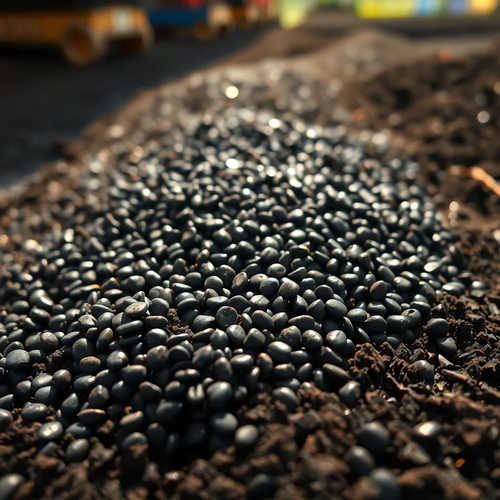
Granular Humic Acid from Iran: Leonardite Humate and Potassium Humate Granules
Why Source Granular Humic Acid from Iran?
Humic products are made from leonardite – a soft, highly oxidised brown coal – or from other oxidised lignite. Iran has extensive lignite and coal-bearing geology, a domestic processing industry serving a large agricultural market, and competitive processing costs, with short overland freight to Iraq, Turkey, Afghanistan, Central Asia and the Caucasus.
But this is a category where we will be more cautious in our claims than in most, because the honest position matters more than the pitch:
Humic product quality is determined overwhelmingly by the deposit, and deposits vary enormously – within a country, within a region, sometimes within a single mine. A supplier’s competence matters less here than the seam they are drawing from. So the first question is not “is this producer good?” but “which deposit is this from, and what does an independent laboratory say about it?”
We also treat with scepticism any supplier who cannot tell you whether they extract from a deposit they control or simply reprocess material bought in. Both can be fine. Not knowing which one you are dealing with is not.
If you are building a fertiliser portfolio from Iran, see also our guides to potassium sulphate, ammonium sulphate and sulphur bentonite.
Two Different Products Sold Under One Name
This is the single most important thing to understand before you buy, and the source of most disappointment in the category.
1. Ground and granulated raw leonardite. Mined leonardite, dried, ground and granulated. Cheap. Contains humic substances, but they are largely insoluble in water at soil pH – the humic acids are present but bound. It works slowly as a soil amendment where soil conditions gradually release activity, and it does essentially nothing in a fertigation tank.
2. Potassium humate granules. Leonardite extracted with potassium hydroxide, which converts the humic acids into soluble potassium humate salts, then dried and granulated. Substantially more expensive, genuinely water-soluble, and the product required for fertigation, foliar application or any use where the humic substances need to be immediately available. Typically also carries a useful potassium content.
Both are legitimately sold as “granular humic acid.” They are not interchangeable, they differ several-fold in price, and a buyer who orders the cheap one for a fertigation customer has bought a product that will block filters and deliver nothing.
Decide which you need before you request a price, and write it into the RFQ.
The Test Method Problem – Read Before Comparing Quotes
Here is the trap that catches most first-time buyers in this category.
There is no single universal method for determining humic acid content, and different methods give dramatically different numbers on the same material. Older alkaline-extraction and colorimetric methods can return figures far higher than modern standardised gravimetric methods such as ISO 19822. Two suppliers can honestly quote “70% humic acid” and “45% humic acid” for materially similar products, purely because they used different methods.
The consequences are direct:
- A percentage without a named method is not a specification. It is a number with no unit.
- Comparing two quotes tested by different methods is meaningless, and the supplier quoting the higher number is not necessarily offering the better product.
- Always specify the method – name ISO 19822 or whichever standard your market uses – and require all candidates to be tested by the same method, ideally at the same independent laboratory.
If a supplier cannot tell you which method produced their figure, that itself is the answer.
Specification: What to Put in the Contract
- Total humic extract (humic + fulvic acids), by a named method.
- Humic acid content, by the same named method.
- Fulvic acid content, separately.
- Water solubility – the percentage that actually dissolves, and the pH at which it was measured. Essential for potassium humate; the distinguishing number between the two product types.
- K₂O content for potassium humate grades – commonly in the low to mid teens as a percentage.
- Moisture – typically below 15-20% depending on grade; drives both freight economics and caking.
- pH of a standard solution. Potassium humate is alkaline, often pH 9-11, which matters for tank mixing and compatibility with acidic products.
- Water-insoluble matter / residue – what stays behind and blocks filters and emitters.
- Particle size distribution – for granular, typically 2-4 mm, with a stated percentage in range. Match it to the blend if it will be bulk blended.
- Crush strength and dust – granules must survive handling, blending and spreading without becoming powder.
- Ash content – high ash means you are paying freight on inert mineral matter.
- Heavy metals – leonardite is a geological material and can carry arsenic, cadmium, lead and mercury depending on the deposit. Always test. This is the specification most likely to fail on an unverified deposit, and it is a hard barrier for EU-destined and organic-certified product.
- Source declaration – deposit, region, and whether the supplier mines it or buys it in.
Applications and Realistic Claims
Granular humic products are used as soil conditioners and as fertiliser enhancers: improving soil structure and water retention, increasing cation exchange capacity, chelating micronutrients, and improving the efficiency of nitrogen and phosphorus inputs. Granular form suits broadcasting, incorporation at land preparation, and bulk blending with NPK.
A word on marketing, because it protects you: this category attracts extravagant claims. Humic substances have genuine, documented effects on soil chemistry and nutrient efficiency, and the response varies substantially with soil type, organic matter status and management. Distributors who promise dramatic yield responses on any soil eventually lose their credibility with agronomists, who are the people who actually drive repeat purchase. Sell the soil chemistry, sell the nutrient-efficiency case, and let the trial data do the rest.
Compliance & Certification
- EU: the Fertilising Products Regulation (EU) 2019/1009 covers relevant product function categories, with contaminant limits. Some jurisdictions additionally set minimum content requirements – for example a minimum total humic extract and a minimum humic acid content – for a product to be labelled as a humic product at all. Check your destination’s thresholds against your actual tested figures.
- Organic certification. Humic substances from leonardite are permitted under most organic standards, which makes an organic-certified grade a valuable SKU. Potassium humate produced with potassium hydroxide is treated differently by some certifiers – verify with your own certifier against the specific extraction route, in writing.
- Destination product registration – required in most markets, and usually the longest lead item.
- Heavy metal limits – the practical compliance risk in this category, because it is a geological material.
- SDS in GHS format in the destination language. Not normally a dangerous good; confirm rather than assume.
Packaging & Marking
- 25 kg PP woven bags with PE liner, or 500-1,000 kg FIBC for bulk supply.
- Moisture barrier matters: humic granules absorb moisture, soften and cake.
- UV-stabilised FIBC fabric for outdoor storage at destination.
- Note that this is a dusty, staining material – fine humate dust is dark brown-black, gets everywhere, and stains equipment and clothing. Bag integrity is a commercial issue, not just a quality one. Specify bag strength and inspect seals at loading.
- Mark with product name and type (raw leonardite granule or potassium humate), humic and fulvic percentages with the test method stated, K₂O where applicable, net weight, lot number, production date, origin and destination regulatory information.
MOQ, Lead Time & Incoterms
MOQ follows container economics – roughly 22-26 tonnes bagged in a 20’ container depending on bulk density. Potassium humate grades, private-label bagging and specific particle sizes carry higher minimums.
Lead time typically runs 2-5 weeks from an established processor, longer for potassium humate, organic-certified grades or private label. Destination registration runs in parallel and is usually the critical path.
Incoterms: FOB Bandar Abbas for sea freight; EXW for overland movement to Iraq, Turkey, Afghanistan, Armenia, Azerbaijan and Central Asia. CFR/CIF available. Fix in the contract who commissions and pays for the independent analysis and the pre-shipment inspection.
Price & Total Cost of Ownership
- Compare like for like, tested by the same method, at the same laboratory. Until you have done that, price comparison in this category is guesswork.
- Product type is the largest price driver: potassium humate is a multiple of raw granulated leonardite.
- Deposit quality is the second: high humic content and low ash cost more at source and are worth more per tonne delivered.
- Ash and moisture are freight you pay for and nutrients you do not get. A cheap product with high ash and high moisture can be more expensive per unit of actual humic substance.
- Registration and certification are largely one-off.
The expensive failures: a fertigation customer supplied with insoluble raw leonardite, and a heavy metal result that arrives after the container does. Both are prevented by a laboratory test before the order, which is the cheapest money you will spend in this category.
How IranLocalize Reduces Your Risk
- Deposit and supplier verification. We establish which deposit the material comes from and whether the supplier mines and extracts or reprocesses bought-in material – and we tell you which.
- Specification drafting with the test method named, plus solubility, ash, moisture, particle size, crush strength, dust and a full heavy metal panel.
- Independent laboratory testing on the production lot, at a laboratory we instruct, with all candidate suppliers tested by the same method at the same lab so the comparison is real.
- Solubility and dissolution testing at your working concentration where the product is destined for fertigation.
- Regulatory support on destination registration, EU thresholds, organic route confirmation and SDS.
- Contracting with hard specs including the method, retained samples, inspection rights and penalties.
- Pre-shipment inspection – bag condition and seals, moisture, dust, sampling for retained analysis, loading supervision.
- Straight answers on claims. We will not help you market a product on performance claims its analysis does not support.
RFQ Checklist – Send This to Get a Precise Quote
- Product type – granulated raw leonardite, or potassium humate granules.
- End use – soil application, bulk blending, or fertigation/foliar.
- Required humic acid and total humic extract, and the test method you will measure against.
- Required fulvic acid content.
- Water solubility requirement, and the pH at which it is measured.
- K₂O requirement for humate grades.
- Maximum moisture and maximum ash.
- Particle size range, and the blend components if it will be blended.
- Maximum dust and minimum crush strength.
- Heavy metal limits for your destination.
- Organic certification required yes/no – confirm your certifier’s position on the extraction route.
- Quantity and packaging – 25 kg or FIBC; private label yes/no.
- Destination country and your registration status.
- Incoterm, destination port or border crossing, and target shipment window.
Buyer Mistakes and How to Avoid Them
- Comparing percentages tested by different methods. The commonest and most expensive mistake in this category. Fix: name the method, test all candidates the same way at the same lab.
- Buying raw leonardite granules for a fertigation customer. Fix: buy potassium humate and require a solubility figure and a dissolution test.
- Never testing heavy metals. It is a geological material; the deposit decides. Fix: full panel on every new source, every time.
- Ignoring ash and moisture. Fix: specify maxima and compare on cost per unit of actual humic substance delivered.
- Assuming organic eligibility. Fix: confirm with your own certifier against the extraction route, in writing.
- Buying granules that turn to dust. Fix: specify crush strength and maximum fines after a handling simulation.
- Over-promising performance. Fix: sell the soil chemistry and the nutrient-efficiency case; let trials speak.
- Starting destination registration after ordering. Fix: start it first.
FAQs
What is the difference between leonardite granules and potassium humate granules? Leonardite granules are ground raw material – cheap, largely water-insoluble, slow-acting as a soil amendment. Potassium humate granules are leonardite extracted with potassium hydroxide to make the humic acids soluble – more expensive, water-soluble, and the correct product for fertigation or foliar use.
Why do suppliers quote such different humic acid percentages? Usually because they used different test methods, which give very different numbers on the same material. Specify a method such as ISO 19822 and have all candidates tested identically.
Can I use it in fertigation? Only the soluble potassium humate grade, and only after a dissolution test at your working concentration. Insoluble material blocks filters and emitters.
Is it suitable for organic farming? Humic substances from leonardite are permitted under most organic standards, but potassium hydroxide extraction is treated differently by some certifiers. Confirm with your own certifier before making any claim.
Can it be bulk blended with NPK? Yes, and it is a common use – but specify granule size to match the blend, plus crush strength and maximum dust, or it will segregate and degrade.
How much should I expect it to improve yields? That depends heavily on soil type, organic matter status and management, and any supplier quoting a single confident figure is overselling. Buy on analysis, sell on soil chemistry and nutrient efficiency, and run local trials.
What is a realistic first order? One container of a single grade, with independent analysis including a full heavy metal panel and a solubility figure, tested by a named method.
Collaboration Workflow with IranLocalize
- Send your RFQ using the checklist above, naming the product type, end use and test method.
- We shortlist verified suppliers and identify the deposit behind each, stating who mines and who reprocesses.
- Sample collection from current production, with retained samples on both sides.
- Independent testing – all candidates by the same method at the same laboratory, including solubility, ash, moisture and a heavy metal panel.
- Regulatory workstream – destination registration, EU thresholds, organic confirmation and SDS, in parallel.
- Contract with hard specs including the test method, retained-sample rights, inspection rights and penalties.
- Production and pre-shipment inspection with photographic evidence.
- Shipping and documentation.
- Post-season review – field results inform the next order’s specification.
Executive Summary
- Why Iran: lignite-bearing geology, domestic processing serving a large agricultural market, competitive costs and short overland freight to major regional markets.
- What actually matters: which of the two products you are actually buying, the test method behind the percentage, water solubility, ash, and a heavy metal panel on the specific deposit.
- Where buyers lose money: comparing percentages produced by different methods, and supplying insoluble raw leonardite to a customer who needed potassium humate.
- Why IranLocalize: we identify the deposit, test every candidate the same way at the same laboratory so the comparison is real, verify heavy metals before you commit, and decline to support claims the analysis does not back.
Ready to evaluate humic acid suppliers in Iran? Tell us the product type, end use, destination and the test method you work to. We will come back with verified options, comparable analyses, and a realistic timeline.